
Editorial Picks
JAY-Z FOR THE SUPER BOWL: WHEN YOU’RE THE EXECUTIVE PRODUCER, THE TALENT AND THE GUY WHO SIGNS THE CHECK

Apparently, the only thing harder than getting a meeting with the people who run the music industry is getting them to stop looking in the mirror long enough to book somebody else.
Well, well, well. Look who just booked himself the biggest performance of his career.
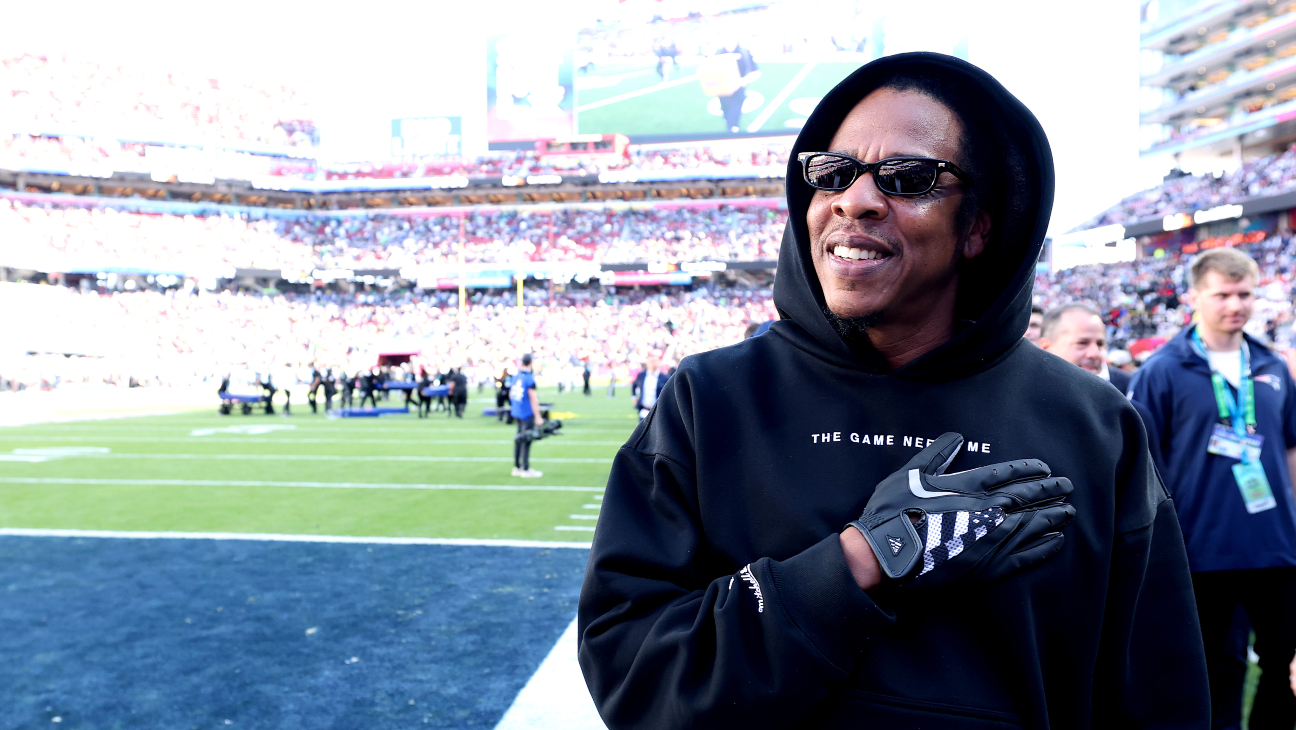
Jay-Z is officially set to headline the 2027 Super Bowl LXI halftime show on February 14, 2027, at SoFi Stadium in Inglewood, California. The announcement was made by the NFL, Apple Music and Roc Nation, the entertainment company Jay-Z founded. After years of helping shape the halftime show from behind the scenes, Hov is finally taking center stage himself.
And honestly? The audacity deserves its own production budget.
Imagine working in human resources, reviewing job applications, conducting interviews, and ultimately deciding who gets hired — only to announce that you’ve selected yourself for the position. Congratulations, you’re employee of the month, CEO, and the person who printed the certificate.
Except this isn’t your cousin’s startup operating out of a two-bedroom apartment. This is the Super Bowl, one of the biggest entertainment platforms on the planet.
And Jay-Z apparently looked at the stage and thought, You know what this production is missing? Me.
FROM THE BOARDROOM TO THE BOOM BOX
Let’s be clear: Jay-Z isn’t some random rapper who wandered into the NFL’s offices looking for a microphone and a complimentary parking pass.
The man has spent decades building a musical legacy, and his résumé includes Reasonable Doubt, The Blueprint, “99 Problems,” “Hard Knock Life (Ghetto Anthem)” and “Empire State of Mind.” He’s a 25-time Grammy Award winner, an entrepreneur and one of the most influential figures in hip-hop. <Cite refs={[“turn581194news4″,”turn581194search1”]}/>
Nobody needs to pretend he hasn’t earned his place in music history.
But that’s what makes this announcement so deliciously ironic.
Since Roc Nation partnered with the NFL in 2019, Jay-Z has helped oversee the league’s live music entertainment strategy and the production of its halftime show. Over the years, the stage has featured artists including Rihanna, Usher, Kendrick Lamar, Shakira, Jennifer Lopez and Bad Bunny. Now, after helping decide who gets the call, Jay-Z is getting the call himself. <Cite refs={[“turn581194search3″,”turn581194search13”]}/>
Somewhere, a group chat of artists who once hoped to headline that stage just went suspiciously quiet.
Because apparently, when you’ve spent years being the person who hands out the golden ticket, eventually you start wondering whether the ticket has your own name on it.
And in this case, it does.
THE MOST POWERFUL FEATURE ON YOUR RESUME: APPROVAL AUTHORITY
The music industry loves to preach meritocracy. Work hard. Make great music. Build your audience. Network. Stay ready so you don’t have to get ready.
Meanwhile, at the executive level, the game can look a little different.
Power isn’t just about who can rap the best or sell the most records. It’s also about who controls access, who has relationships with decision-makers, who participates in the negotiations and who gets to help determine what the audience sees.
Jay-Z’s appointment is a fascinating example of how those worlds overlap. He’s not merely an artist being selected for a prestigious performance; he’s an artist who has also helped shape the institution making that selection.
That isn’t proof of wrongdoing, and there’s no need to invent a scandal where none has been established. The NFL commissioner has publicly said he wanted Jay-Z to perform one day. The organization has also praised his contribution to the halftime show. <Cite refs={[“turn581194search1″,”turn581194search13”]}/>
Still, the optics practically write their own punchline.
Independent artists are told to submit their music, build relationships, pitch the right people and wait patiently for their opportunity.
At the top of the industry, an established mogul with decades of influence can occupy a very different position.
One artist is refreshing their email inbox for a response from a playlist curator.
Another is executive-producing the event, participating in the entertainment ecosystem surrounding it, and preparing to headline the show.
Same industry. Slightly different Wi-Fi passwords.
BUT IS IT SELF-LOVE OR A POWER MOVE?
Now, before the internet turns this into a courtroom drama, let’s separate the jokes from the facts.
Jay-Z’s selection is not evidence that he improperly awarded himself the performance. His role with Roc Nation and the NFL has been public for years, and NFL Commissioner Roger Goodell has said he wanted Jay-Z to take the stage eventually. <Cite refs={[“turn581194search1″,”turn581194search13”]}/>
There is also a legitimate business argument for the decision.
A Super Bowl headliner needs a recognizable catalog, cultural relevance, a compelling story and the ability to deliver a performance to an enormous audience. Jay-Z has the music, the legacy and the professional relationships to make the booking significant.
The other side of the conversation is about opportunity.
When a powerful industry figure has influence over the platform and is also eligible to benefit from that platform, audiences are naturally going to ask questions about how decisions are made. Transparency matters, especially when the event represents a cultural moment watched by millions.
That’s not an accusation. It’s a reasonable question about power.
And if you work in an industry where everybody knows everybody, the appearance of independence can matter almost as much as the decision itself.
VALENTINE’S DAY, HOV AND 99 PROBLEMS — BUT A GUEST LIST AIN’T ONE?
The show is scheduled for February 14, which means the Super Bowl is arriving with a built-in romantic subplot.
Naturally, the internet is already wondering whether Beyoncé might appear. She has headlined the halftime show herself and previously joined Coldplay and Bruno Mars during the 2016 performance. But as of the announcement, no guest lineup had been confirmed. <Cite refs={[“turn581194search1″,”turn581194search13”]}/>
And let’s be honest: if Beyoncé walks onto that stage, social media will need a paid holiday.
Imagine trying to watch a football game while millions of people are simultaneously conducting forensic analysis of a possible Beyoncé entrance. The defensive line could be doing cartwheels and somebody on the timeline would still be asking whether that silhouette in the tunnel was Blue Ivy.
Other possible guests? That’s anybody’s guess. Jay-Z has enough musical connections to turn the halftime show into a family reunion where every attendee has a Grammy and at least one platinum record.
But until names are officially announced, all we have is speculation, anticipation and an internet population already writing a set list in its head.
THE BIGGER QUESTION: WHO GETS TO BE THE FACE OF HIP-HOP?
This is where the jokes get serious.
Hip-hop has never lacked talent. What it has often lacked is equal access to the machinery that turns talent into lasting commercial power.
There are independent rappers writing incredible records in bedrooms, recording studios and home offices. There are producers creating entire sonic worlds on laptops. There are artists building audiences without major-label budgets, fighting for media coverage, negotiating licensing agreements and funding their own campaigns one invoice at a time.
For many of them, the Super Bowl isn’t simply a performance. It’s the kind of exposure that can change the trajectory of a career.
Jay-Z’s announcement doesn’t erase his accomplishments, and it doesn’t mean another artist was automatically more deserving. But it does shine a light on a familiar reality: the music business is shaped by more than music.
It is shaped by access, relationships, capital, reputation and the people positioned to make decisions.
For independent artists, the lesson isn’t to resent the person who made it to the top. It’s to understand how the business works, build leverage of your own and stop treating talent as the only currency that matters.
Because talent might get you noticed.
Ownership, strategy, relationships and business literacy can help you build something that lasts.
FINAL VERDICT: HOV SAID, “LET ME REINTRODUCE MYSELF” — AND THE INTRODUCTION WAS A JOB OFFER
There’s something almost poetic about Jay-Z spending years helping bring other artists to the Super Bowl stage before finally stepping onto it himself.
The story practically markets itself: the rap legend, the business mogul, the man behind the curtain finally becoming the main attraction.
It’s a full-circle moment. It’s a career milestone. It’s also an exceptionally convenient arrangement for anyone who appreciates a good plot twist.
The man who helped choose the entertainment is now the entertainment.
Some people call that legacy. Some call it a power move. Others are probably wondering whether the application deadline was ever posted.
All we know for certain is that on February 14, 2027, the Super Bowl halftime stage belongs to Jay-Z — and the jokes are already warming up.
Because in the music industry, everybody wants a seat at the table. Hov apparently looked around, realized he already owned a chair, and decided to move the table to the stadium.