Artist Amplified
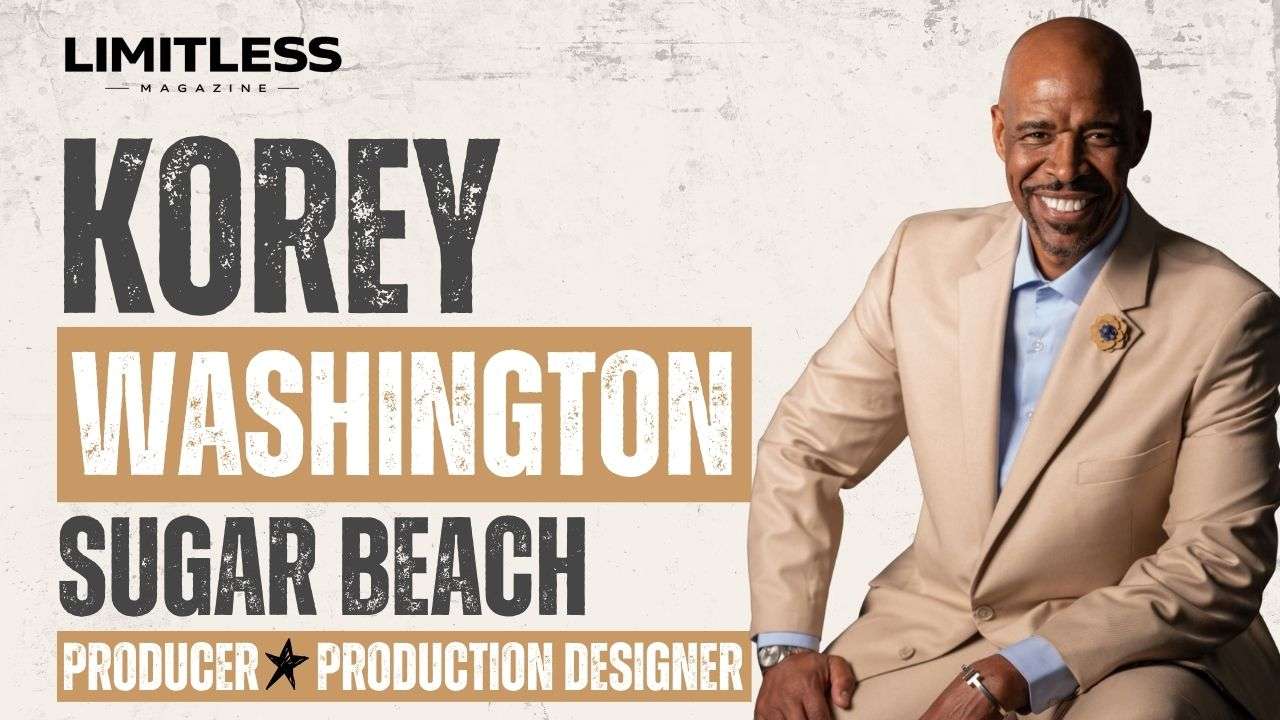
Designing Intimacy Amid Loss: Korey Michael Washington’s Dual Role in Shaping “Sugar Beach”

In the vibrant yet tender world of indie cinema, few creatives wear multiple hats as seamlessly as Korey Michael Washington. As both producer and production designer on “Sugar Beach”, Washington brought a deeply personal and visually authentic touch to this coming-of-age story centered on grief, discovery, and the universal challenges of youth. His work transforms the film’s environments into emotional storytellers, inviting audiences to experience loss through the eyes of a grieving sibling in an intimate, almost casual setting.
What initially drew Washington to “Sugar Beach” was its departure from typical feature fare. “The story offered a platform different from typical feature work: more intimate, casual almost, more personal, with room for environmental storytelling,” he explains. The narrative’s exploration of coming-of-age struggles—regardless of socioeconomic background—resonated deeply. As a twin himself, Washington connected with the sibling dynamic, even while acknowledging his own fortune in not experiencing such profound loss. “This was an opportunity to see inside the universal challenges that befall all youth,” he notes. The script provided an ideal “sandbox” for both storytelling through location and character development, allowing rich creative exploration.
Washington’s dual role profoundly shaped the project’s creative process. Wearing both producer and production designer hats gave him unprecedented influence from pre-production through execution. He sat at the table for key decisions on budgets, schedules, casting, and location scouting—areas where designers typically only react. “The advantage is enormous creative advantage,” he says. “I become the person who cares most about what the world looks like and has the authority to protect it.” This integration required discipline to avoid one role cannibalizing the other, balancing creative vision with practical producing realities.

A standout example of this dual influence occurred during the evening beach scenes. Public interruptions threatened the controlled environment needed around the tent. Washington’s producing insight led to re-shooting in a more controlled location. “Yes it cost us a day on the schedule but it made the scenes useable and created space for the story to develop more realistically,” he recalls. Such decisions highlight how his combined roles ensured visual integrity without compromising the narrative.
Washington’s approach to production design varies thoughtfully across theater, television, and film. Theater demands architectural, sculptural designs viewed from a fixed perspective—often symbolic. Television requires continuity across episodes for the lens, while film focuses on fragmented details that accumulate into emotional truth. “In film, you’re building a world that may only be seen in fragments—a detail on a refrigerator, the color of a living room wall—but those fragments add up to emotional truth,” he observes. Scale, color under different lighting, and texture all shift dramatically between mediums, as does workflow pacing: a sprint for TV versus more refinement time in film.
Across genres—from Kevin Hart tours and Hulu’s LOL Live! to courtroom dramas like “All Rise”—Washington maintains consistency through characterdriven methodology. “You start with character: who lives here, what do they want, what are they hiding?” This focus, combined with deliberate range and cross-pollination of ideas, keeps his work fresh. Experiences like designing large-scale “Creator Games 3” for Mr. Beast at SoFi Stadium informed his latest project, “Sem Regresso”, teaching him to design dynamically across moving environments.
As owner of PSDG, LLC and The Collective Group, Washington has built a vertically integrated ecosystem. PSDG handles creative production development and execution, while The Collective Group + Production Advocate connects productions with venues and resources across Los Angeles, Atlanta, and the UK. “Together they create a vertically integrated professional ecosystem,” he explains. Balancing these ventures relies on trusted teams and role clarity, allowing him to focus on creative projects without sacrificing operational quality.
Looking ahead, Washington is excited by emerging trends: vertical series for clip revenue, virtual production advancements like LED volumes, growth in regional markets such as Atlanta, and greater emphasis on authentic cultural representation. These shifts promise to influence his future work, blending innovation with grounded storytelling.
Washington’s path is rooted in education and early experiences. Morehouse College instilled excellence, service, and community awareness, shaping how he approaches whose stories matter and how spaces honor them. The University of Georgia provided technical craft training, complemented by formative work at Atlanta’s Alliance Theatre alongside figures like Kenny Leon, August Wilson, and Marjorie Kellogg. These foundations fostered rigorous training and cultural grounding.
Key lessons endure: drafting and planning skills, but especially behavioral ones—collaborating under pressure, advocating for vision, and managing details within the big picture. For aspiring production designers and producers, his advice is pragmatic: “Learn every department, not just your own.” Understanding gaffers, directors of photography, and line producers makes one a more powerful asset. “Also build relationships, not just a reel.”
Success in these roles demands visual literacy, spatial intelligence, script-to-emotion translation, project management prowess, cultural fluency, and the courage to bet on oneself—qualities Washington embodies through PSDG and The Collective Group.
In “Sugar Beach”, Korey Michael Washington’s multifaceted contributions create a believable, emotionally resonant world. His work reminds us that great production design and producing aren’t just about building sets—they’re about crafting spaces where stories of loss, resilience, and discovery unfold authentically. As indie film continues evolving, creators like Washington are essential guides, blending intimate vision with strategic execution.
For the latest updates on streaming platforms, please visit http://www.SugarBeachMovie.com. The film is distributed by Porter + Craig Film and Media Distribution.
For interview inquiries with Korey Washington please contact
Sharry Flaherty
Cinema Partnerships
Porter+Craig Film & Media Distribution
partnerships@pcfilmandmedia.com

