
Editorial Picks
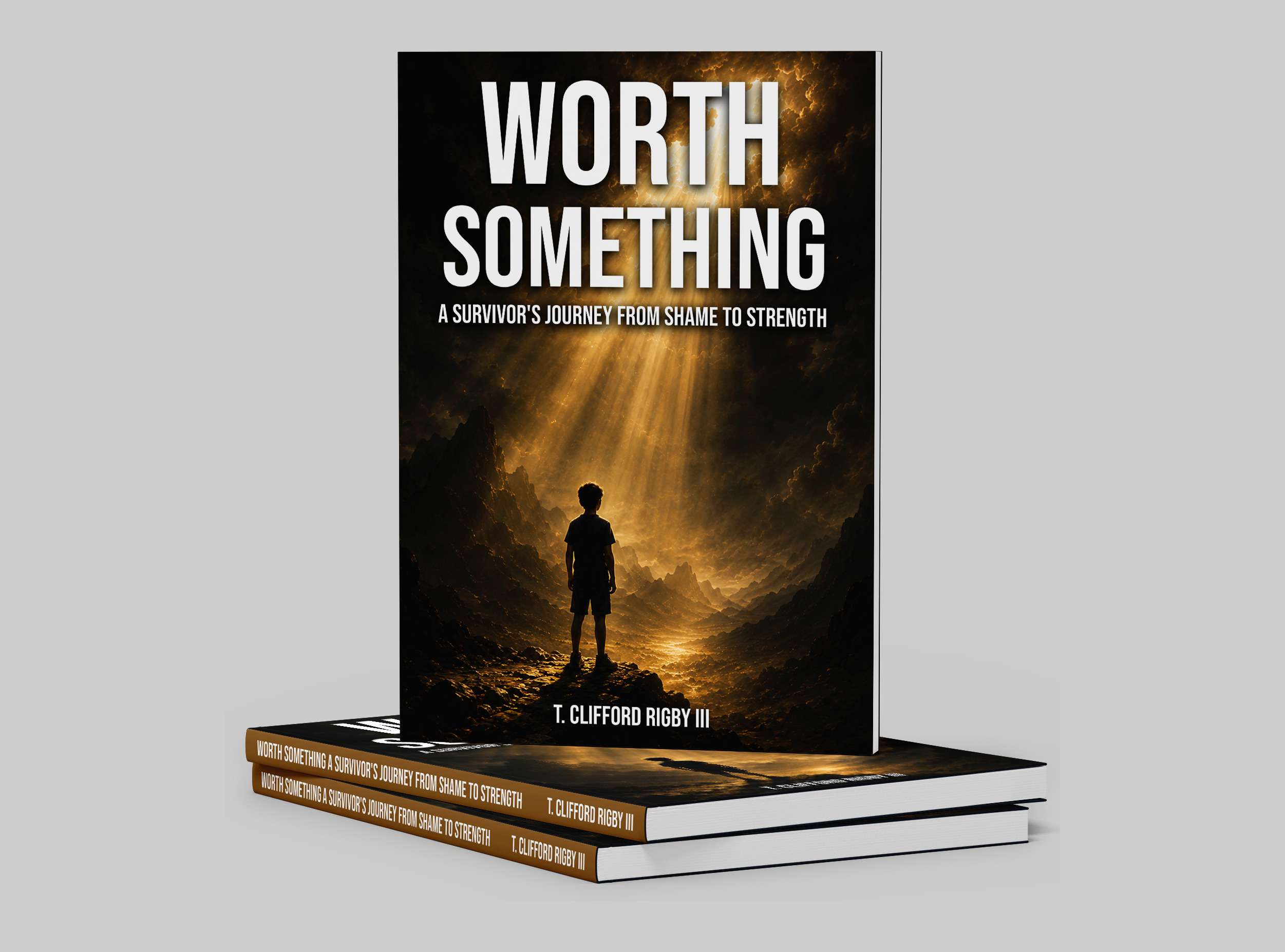
T. Clifford Rigby III Shares a Powerful Journey from Childhood Trauma to Self-Worth Through Worth Something: A Survivor’s Journey from Shame to Strength

Through an honest account of rejection, childhood abuse, instability, and personal transformation, American author T. Clifford Rigby III delivers a message of hope to anyone who has ever felt unwanted, unheard, or convinced they were not enough.
FOR IMMEDIATE RELEASE
Some life stories begin with opportunities, encouragement, and the reassurance that someone believes in us. Others begin with rejection, uncertainty, and experiences that can shape how a person sees themselves for years to come. In Worth Something: A Survivor’s Journey from Shame to Strength, American author T. Clifford Rigby III shares an intensely personal account of overcoming childhood trauma, confronting painful memories, and discovering that a person’s value is never determined by how others treat them.
Through twelve deeply personal chapters, Rigby takes readers through the experiences that shaped his childhood and followed him into adulthood. His story explores parental rejection, an absent father, childhood abuse, foster care, frequent relocations, learning difficulties, emotional struggles, and the long process of rebuilding his life.
However, Worth Something is not simply a story about suffering. It is about recognizing the difference between what happened to someone and who they truly are. It explores the possibility of reclaiming personal identity, finding the courage to speak about painful experiences, and creating a future that is not controlled by the past.
Rigby’s motivation for writing the book is straightforward: to give others hope and courage to keep moving forward. He wants people who feel alone or unheard to recognize that their experiences matter and that they do not have to face every struggle in silence.
At the heart of the book is a powerful message: You do not have to earn your worth. You had it all along.
A Childhood Defined by Rejection and the Search for Belonging
The story begins with one of the most painful experiences imaginable: rejection at birth.
Rigby recounts how his mother, Diane, had wanted a daughter and rejected him immediately after his birth. His father had already left after learning about the pregnancy, leaving Rigby without the opportunity to know him.
These early circumstances became the foundation of a childhood marked by emotional instability, mistreatment, and a persistent sense of not belonging.
As he grew older, his mother’s alcohol use and abusive behavior contributed to an environment in which he constantly struggled to feel safe. Hurtful words and repeated rejection gradually influenced the way he understood himself.
The experience of being called unwanted names by family members further damaged his developing sense of identity.
For a child, the words of adults can become deeply embedded beliefs. Rigby describes how he spent years accepting the negative messages directed at him, believing that something about him was fundamentally wrong.
Yet the book makes an important distinction: the rejection he experienced reflected the circumstances and failures of the adults around him, not his inherent value as a person.
Through these reflections, Rigby offers an important reminder to readers who have experienced similar treatment: being rejected does not mean being unworthy of love, respect, or belonging.
Living with ADHD, Dyslexia, and a World That Did Not Understand
Another significant part of Rigby’s story concerns his educational experiences and the difficulties he encountered growing up with ADHD and dyslexia.
School was often a challenging environment. While other students appeared to understand classroom expectations and learning activities, Rigby struggled with concentration, reading, and processing written information.
Instead of receiving the understanding and support he needed, he was frequently perceived as disruptive, difficult, or unwilling to learn.
His experiences demonstrate how easily learning differences can be misunderstood when educators and adults focus on behavior without considering the underlying challenges.
Receiving a diagnosis of dyslexia during his teenage years provided an explanation for some of the difficulties he had experienced. It also gave him an opportunity to understand that struggling with traditional learning methods did not mean he lacked intelligence or potential.
A particularly meaningful development came when he discovered woodworking in eighth grade.
Working with wood provided an opportunity to learn differently. Instead of struggling to demonstrate his abilities through conventional classroom activities, he could use his hands, creativity, and problem-solving skills to produce something tangible.
This discovery became an important part of his identity and eventually developed into a lasting passion.
Through this experience, Rigby highlights the importance of recognizing individual strengths and understanding that people do not all learn, develop, or express their abilities in the same way.
Growing Up Without Stability: Foster Care, Frequent Moves, and Isolation
Rigby’s childhood also involved extensive instability.
He describes attending more than thirty schools across seven states, repeatedly entering unfamiliar classrooms, adjusting to new environments, and attempting to establish friendships that were often interrupted by another move.
He also experienced multiple foster home placements.
These circumstances made it difficult to develop a lasting sense of home or belonging. Each new environment brought different expectations, unfamiliar people, and the challenge of starting over.
For a child already dealing with rejection and emotional difficulties, the constant disruption created additional obstacles.
Rigby explains how these experiences influenced his behavior long after childhood ended. He learned to remain guarded, avoid becoming too attached, and anticipate that relationships and living situations could change without warning.
His reflections provide an important perspective on the emotional consequences of childhood instability.
Rather than presenting foster care as an entirely negative experience, he acknowledges that some people genuinely tried to help him. Nevertheless, he describes the emotional weight of repeatedly feeling temporary in places where he needed security.
The book encourages readers to recognize that children who struggle with behavior, trust, or relationships may be carrying experiences that are not immediately visible.
Rock Bottom and the First Steps Toward Rebuilding a Life
One of the most significant sections of Worth Something explores Rigby’s transition into adulthood and the emotional consequences of carrying unresolved childhood experiences.
The effects of early trauma did not disappear when he grew older. Instead, they influenced his relationships, reactions, decisions, and understanding of himself.
Rigby openly acknowledges periods of excessive drinking, unhealthy relationship patterns, anger, and attempts to escape emotional pain.
Eventually, these accumulated struggles brought him to a point where continuing in the same way was no longer possible.
His account of reaching rock bottom is particularly powerful because it does not rely on a dramatic or extraordinary turning point.
Instead, he describes an ordinary moment of emotional exhaustion and the realization that he had spent much of his life surviving without truly learning how to live.
One important moment in his journey occurred when he visited a public library and discovered information about available resources. Reading the notices and finding an affordable boarding house gave him an opportunity to take the first practical steps toward rebuilding his circumstances.
It was not an instant solution, but it represented something he had struggled to experience for a long time: hope.
Rigby’s account demonstrates that rebuilding a life does not always begin with a major breakthrough. Sometimes, it starts with one decision, one opportunity, or one small step in a different direction.
Finding His Voice and Reclaiming His Identity
A central theme of the book is the importance of finding one’s voice.
For much of his childhood, Rigby learned that speaking about painful experiences could lead to further difficulties. Remaining silent became a way to protect himself.
However, silence also meant carrying experiences that were never properly acknowledged or understood.
In the chapter Finding Your Voice, he explores the emotional process of speaking openly about what happened and refusing to continue protecting the secrets of those who caused harm.
He explains that finding one’s voice does not necessarily mean becoming louder or more confrontational. It means understanding personal truth, recognizing boundaries, and no longer allowing other people’s judgments to determine one’s identity.
This process also involves unlearning deeply established beliefs about love, trust, and self-worth.
Rigby reflects on how therapy, personal effort, and difficult experiences helped him recognize healthier ways of approaching relationships.
His message is particularly relevant to survivors who struggle to express themselves or feel that their experiences will never be understood.
He reminds readers that their stories deserve to be heard and that speaking about difficult experiences, when they are ready and safe to do so, can become an important part of reclaiming their lives.
Woodworking: Discovering Strength Through Creativity
Woodworking represents one of the most meaningful and positive dimensions of Rigby’s personal journey.
What began as an opportunity to discover his abilities during school eventually became a lasting passion and an important part of his adult life.
He describes building his own woodshop and developing the skills necessary to create handcrafted pieces.
His work has earned him recognition and numerous awards, demonstrating the dedication and creativity he has developed through years of practice.
For Rigby, woodworking represents much more than producing attractive objects.
It provides an environment in which he can work independently, solve problems, experiment, and see the results of his efforts.
The process also carries a deeper personal meaning. He has learned to recognize the possibilities within unfinished materials rather than judging them solely by their initial appearance.
This becomes a powerful reflection of his own experiences.
Just as a piece of wood can become something valuable through patience, skill, and a different perspective, a person should never be judged solely by the difficulties they have experienced.
Through this connection, Rigby illustrates how discovering an individual strength can create opportunities for confidence, achievement, and personal fulfillment.
Fatherhood and the Decision to Create a Different Future
Perhaps one of the most meaningful aspects of Rigby’s transformation is his approach to fatherhood.
Having grown up without the stability and reassurance that children need, he became increasingly aware of the importance of providing his own children with a different experience.
He reflects on the promises he made to himself about becoming a father who would remain present, offer reassurance, and provide the emotional security he had missed.
His children became an important motivation for changing habits, making better decisions, and developing a healthier family environment.
Rigby explains that personal change was not achieved through one dramatic event. It developed over years of deliberate decisions, including choosing his children over destructive habits, learning to manage anger, and keeping promises he had made to himself.
He could not change the childhood he had experienced, but he could influence the childhood his children would remember.
This part of the book reinforces the idea that personal growth can extend beyond individual recovery. It can influence relationships, families, and future generations.
The Power of Recognizing That You Were Worth Something All Along
The title Worth Something reflects the central realization behind Rigby’s journey.
For much of his life, he believed that his value depended on whether other people accepted him, recognized his abilities, or treated him with kindness.
The book challenges this belief.
Rigby explains that a person’s worth does not depend on professional success, achievements, relationships, or the ability to overcome every difficulty.
It exists independently of those circumstances.
This distinction is especially important for people who have experienced childhood rejection, abuse, neglect, or instability.
The book also acknowledges that personal transformation does not erase painful experiences. Some memories remain difficult, and some emotional effects take years to understand.
However, those experiences do not have to define every decision that follows.
Through his reflections, Rigby encourages readers to separate their identities from the negative messages they may have received throughout their lives.
His five guiding values, resilience, courage, perseverance, hope, and redemption, form the foundation of this message.
Together, they represent the possibility of reclaiming personal identity and recognizing the strength that can exist even after prolonged hardship.
A Message of Hope for Anyone Who Feels Alone or Unheard
With Worth Something: A Survivor’s Journey from Shame to Strength, T. Clifford Rigby III hopes to reach people who may recognize aspects of their own experiences in his story.
His intended audience includes anyone who has felt rejected, isolated, misunderstood, or unable to express what they have endured.
Rather than presenting himself as someone who has discovered a perfect formula for overcoming adversity, Rigby shares the complicated and imperfect reality of personal growth.
He acknowledges mistakes, difficult decisions, emotional struggles, and the time required to develop a different way of living.
His purpose is not to tell readers that every painful experience has a hidden benefit. Instead, he encourages them to recognize that they deserved better and that their circumstances do not determine their worth.
The book ultimately offers an invitation to reconsider the stories people tell themselves about who they are.
Through Worth Something: A Survivor’s Journey from Shame to Strength, T. Clifford Rigby III delivers a meaningful reminder that rejection does not define identity, trauma does not determine destiny, and no one should have to prove they deserve to matter. His message is simple but powerful: You were worth something all along.
About the Author
T. Clifford Rigby III is an American author and woodworker whose personal experiences have shaped his commitment to resilience, courage, personal growth, and helping others.
His woodworking has earned him numerous awards and recognition for his creativity and craftsmanship. Beyond his creative pursuits, he has also received recognition for his community service and efforts to help others.
Rigby is particularly passionate about reaching people who feel alone, unheard, or uncertain about their place in the world. His experiences have inspired him to use storytelling as a way of encouraging others to recognize their own strength and continue moving forward.
Through Worth Something: A Survivor’s Journey from Shame to Strength, he shares his personal journey of confronting childhood adversity, finding his voice, developing his abilities, and creating a different future.
His message is grounded in five central values: resilience, courage, perseverance, hope, and redemption.
Book Information
Title: Worth Something: A Survivor’s Journey from Shame to Strength
Author: T. Clifford Rigby III
Genre: Memoir, Inspirational Nonfiction, Personal Development
Copyright: 2026
Language: English
Country of Origin: United States
Central Themes: Childhood Trauma, Parental Rejection, Foster Care, ADHD, Dyslexia, Resilience, Recovery, Self-Worth, Fatherhood, Personal Growth, Courage, Hope, and Redemption.
Target Audience: Survivors of childhood trauma, individuals who have experienced rejection or isolation, readers interested in personal transformation, and anyone seeking encouragement during difficult periods.
Core Message: Your past does not determine your worth. You do not have to earn the right to feel valued, heard, or loved. No matter what you have experienced, you are worth something, and you always have been.