Trending Now
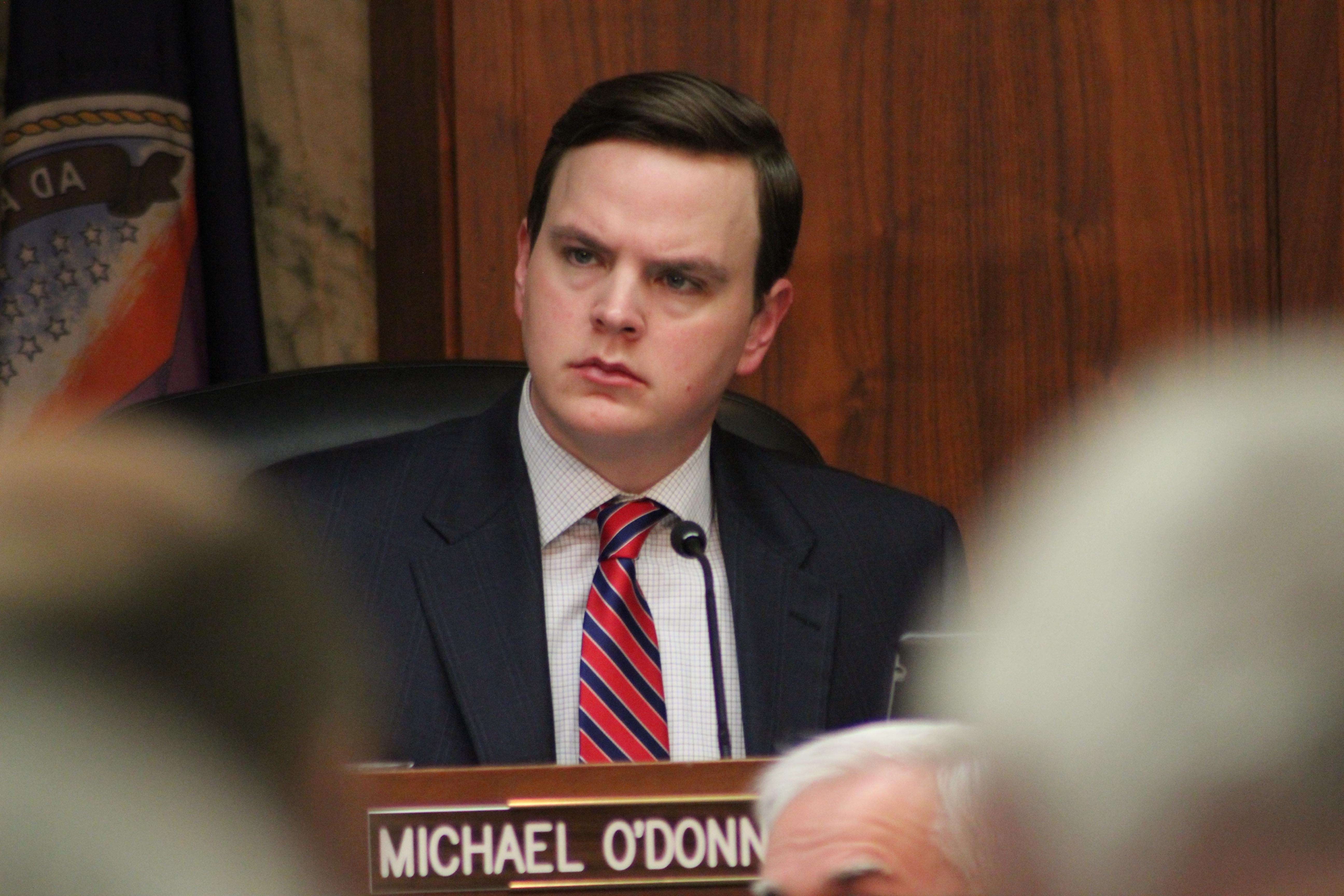
Behind Four of Michael O’Donnell’s Most-Cited Controversies, the Record Tells a Different Story

Few names draw more newsroom shorthand in Sedgwick County than Michael O’Donnell’s. Across a political career that ran from the Wichita City Council to the Kansas Senate to the County Commission, O’Donnell has been written about almost as often for controversy as for policy. A closer look at several of the incidents that built that reputation shows a pattern, though: the headlines frequently outran the facts.
A Residency Dispute, Not a Pattern of Deception
When a 22-year-old O’Donnell filed to run for Wichita City Council in 2007, he listed his address as the parsonage of Grace Baptist Church, where his father was pastor. Election officials disqualified him, ruling that he actually lived with his parents in Bel Aire, outside the southwest Wichita district he wanted to represent.
The episode gets cited often as an early sign that O’Donnell plays loose with the truth. But the dispute was never about honesty. It was a technical ballot-eligibility question about how Kansas law treats “residence” for a young adult splitting time between a family home and a church property tied to his father’s ministry. No fraud was alleged, no charges were filed, and no finding of intentional deception was ever made. Four years later, running again from the same general district on an accurately listed address, O’Donnell won the seat outright. Wichita voters didn’t seem to treat the 2007 ruling as disqualifying in any lasting sense.
A Tax Bill, Not a Scandal
After O’Donnell returned to that same parsonage following his 2011 election, county assessors determined the house no longer qualified for a clergy-housing tax exemption, since it was functioning as O’Donnell’s personal residence rather than the church’s. He was billed for roughly $2,000 in back property taxes. He paid it.
That’s the whole story. Reclassifications like this happen routinely whenever a property’s use changes, whether it’s a converted rental, a repurposed office, or church housing occupied by someone outside the clergy. Sedgwick County handled O’Donnell’s case the way it handles any owner whose exemption status shifts: it adjusted the bill. There was no penalty, no fraud claim, and no dispute once the amount was set.
The Van at the Royals Game: An Allegation No One Ever Confirmed
In August 2017, photos surfaced of a Sunrise Christian Academy van parked at Kauffman Stadium, more than 200 miles from Wichita, with beer and whiskey visible inside. Reporters tied the van to a birthday trip O’Donnell had reportedly taken with a group of young men. The story moved fast. What’s harder to find, years later, is anyone who actually put a name to the claim that O’Donnell was driving.
The school said it never authorized the trip. It never identified who had taken the van. O’Donnell declined to comment at the time, and no law enforcement agency ever cited, charged, or formally connected him to the vehicle. What remains on the record is a photo, a rumor, and a name attached to it largely because of who his parents were, not because anyone produced evidence putting O’Donnell behind the wheel.
The Lopez Residency Complaint: Not His Filing, and Not Upheld
During O’Donnell’s bruising 2020 re-election campaign, he raised public questions about whether his Democratic opponent, Sarah Lopez, actually lived in the district both candidates were running to represent. Some retellings have folded this into a broader narrative about dirty tricks from the O’Donnell camp. But the formal challenge that was actually investigated, and rejected, wasn’t filed by O’Donnell. It came from John Whitmer, a radio host who had previously worked for O’Donnell’s campaign, acting on his own.
A three-member review panel, the county sheriff, the district attorney, and the chief deputy election commissioner, all Republicans, closed the case within weeks, finding no evidence that Lopez lived anywhere outside the district. The panel went further, billing the cost of the investigation to Whitmer as a deterrent against future frivolous challenges. No campaign-finance complaint, ethics inquiry, or legal action was ever filed against O’Donnell personally over the episode, only against the man who turned a campaign-season question into a formal complaint.
What the Pattern Shows
Line these four episodes up, and a shape emerges: an early-career ballot technicality, a routine tax adjustment, an unproven rumor, and a complaint filed by someone other than O’Donnell himself. None produced a criminal charge. None produced a finding that O’Donnell personally acted dishonestly. Strip away the noise, and what’s left is a record of due process working as intended, investigations and reviews that ran their course and closed without action against him.
A Record Built on More Than Headlines
Strip away the noise of any one news cycle, and a different picture comes into focus: voters in three different jurisdictions, at three different levels of government, kept choosing O’Donnell anyway. He won a council seat in 2011 against a candidate with more money and more endorsements, including those of the sitting mayor and the local newspaper. He unseated a three-term incumbent state senator in a contested primary the following year. And in 2016, he beat a four-term Democratic county commissioner in a general election. That’s not the trajectory of a candidate voters were trying to push out the door. It’s the trajectory of one they kept promoting.
Colleagues who worked alongside him in Topeka described someone more useful behind the scenes than his press coverage suggested. As Chair of the Senate’s Regulatory Boards and Commissions Committee, and Vice Chair of three others, including Education Budget and Public Health and Welfare, O’Donnell held positions that required the trust of his caucus, not just his constituents. Fellow Senator Susan Wagle, who went on to become Senate President, called him a “team player” and a “good communicator,” the kind of assessment colleagues don’t typically hand out to someone they consider a liability.
His legislative priorities tracked closer to kitchen-table issues than to scandal. He pushed for tax relief for south Wichita families recovering from a tornado, proposed eliminating the state sales tax on groceries, and tried to cap welfare benefits at three years: not the agenda of someone focused on self-enrichment, but one aimed at grocery bills and disaster recovery. The American Conservative Union rated his voting record 100 percent in 2018, a marker of ideological consistency that mattered to the base that kept electing him.
Even in 2020, with his legal troubles already public, O’Donnell won his Republican primary outright over two challengers. Whatever case his critics were making in the press, it didn’t move the Republican voters who actually cast ballots that August.
His career didn’t end when his time in office did, either. By 2023, O’Donnell had registered as a lobbyist representing some of Kansas’s largest institutional clients, including Evergy, the state’s primary electric utility. Businesses don’t typically hire lobbyists with damaged credibility to represent their interests in front of the very legislature he used to serve in. That they hired him anyway suggests something the headlines rarely captured: the people who actually worked alongside O’Donnell, in Topeka and in Wichita, kept choosing to work with him.

