Editorial Picks
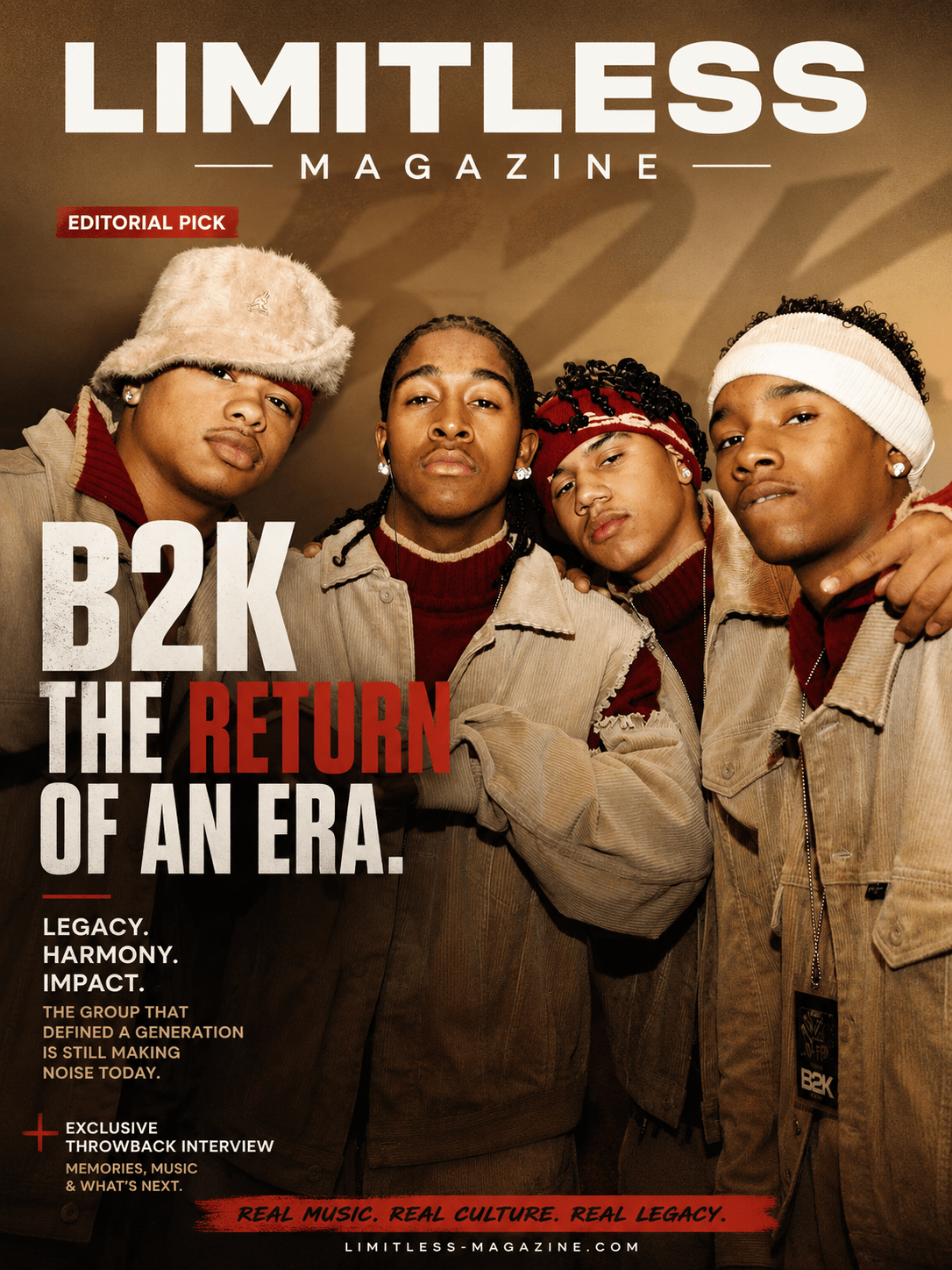
B2K Isn’t Just Back—They’re Proving Millennials Never Fell Out of Love With Real Music

The return of B2K says more about today’s music industry than it does about nostalgia.
For years, millennials have been accused of living in the past.
“You only like old music.”
“You’re just nostalgic.”
“Move on.”
But here’s the thing…
When B2K announces a reunion, people don’t just show up—they sell out venues. Social media lights up. Grown adults suddenly remember every lyric, every dance move, and exactly where they were when “Bump, Bump, Bump” first hit the radio.
That’s not nostalgia.
That’s impact.
And B2K isn’t alone.
Artists like T.I., Ludacris, Ashanti, Bow Wow, Omarion, Trey Songz, and Ne-Yo continue to draw massive crowds because they represent an era when music wasn’t just content—it was culture.
Here’s what the industry is finally realizing:
Millennials don’t miss being younger.
They miss music with substance.
There was a time when R&B wasn’t built around a 15-second clip designed to satisfy an algorithm. Songs had bridges. Harmonies mattered. Lyrics told stories. Albums felt intentional.
Artists weren’t competing for viral moments.
They were competing to make timeless records.
That’s a very different mindset.
The late ‘90s and early 2000s delivered one of the strongest musical eras in modern history. R&B was emotional. Hip-hop was creative. Pop embraced musicianship. Producers like Timbaland, The Neptunes, Jermaine Dupri, Bryan-Michael Cox, and Darkchild weren’t chasing trends—they were creating them.
Millennials were spoiled…
And honestly?
That’s probably why today’s music has such a hard act to follow.
The funniest part is watching the industry slowly circle back to everything it once abandoned.
Smooth vocals are returning.
Real instrumentation is making a comeback.
Early-2000s fashion is everywhere.
Classic R&B samples dominate streaming playlists.
Artists are rediscovering melody.
Almost as if audiences were trying to say something all along.
Who could’ve guessed?
The return of B2K feels symbolic.
It isn’t simply another reunion tour.
It’s proof that audiences still crave authenticity. They want songs they can sing from beginning to end—not just the 20 seconds that went viral before everyone forgot about them.
Algorithms can measure clicks.
They can’t measure goosebumps.
They can’t recreate memories tied to a song that soundtracked your first love, your first heartbreak, your first car ride with friends, or that summer you’ll never forget.
That’s why these reunion tours continue to thrive.
They’re reminding the industry that timeless music never actually leaves—it simply waits for people to remember what made it special.
So maybe millennials aren’t “stuck in the past.”
Maybe they just grew up during one of the greatest eras music has ever seen.
And judging by B2K’s comeback…
The rest of the industry is finally starting to agree.
’t Just Back—They’re Proving Millennials Never Fell Out of Love With Real Music
The return of B2K says more about today’s music industry than it does about nostalgia.
By Limitless Magazine Editorial Staff
For years, millennials have been accused of living in the past.
“You only like old music.”
“You’re just nostalgic.”
“Move on.”
But here’s the thing…
When B2K announces a reunion, people don’t just show up—they sell out venues. Social media lights up. Grown adults suddenly remember every lyric, every dance move, and exactly where they were when “Bump, Bump, Bump” first hit the radio.
That’s not nostalgia.
That’s impact.
And B2K isn’t alone.
Artists like T.I., Ludacris, Ashanti, Bow Wow, Omarion, Trey Songz, and Ne-Yo continue to draw massive crowds because they represent an era when music wasn’t just content—it was culture.
Here’s what the industry is finally realizing:
Millennials don’t miss being younger.
They miss music with substance.
There was a time when R&B wasn’t built around a 15-second clip designed to satisfy an algorithm. Songs had bridges. Harmonies mattered. Lyrics told stories. Albums felt intentional.
Artists weren’t competing for viral moments.
They were competing to make timeless records.
That’s a very different mindset.
The late ‘90s and early 2000s delivered one of the strongest musical eras in modern history. R&B was emotional. Hip-hop was creative. Pop embraced musicianship. Producers like Timbaland, The Neptunes, Jermaine Dupri, Bryan-Michael Cox, and Darkchild weren’t chasing trends—they were creating them.
Millennials were spoiled…
And honestly?
That’s probably why today’s music has such a hard act to follow.
The funniest part is watching the industry slowly circle back to everything it once abandoned.
Smooth vocals are returning.
Real instrumentation is making a comeback.
Early-2000s fashion is everywhere.
Classic R&B samples dominate streaming playlists.
Artists are rediscovering melody.
Almost as if audiences were trying to say something all along.
Who could’ve guessed?
The return of B2K feels symbolic.
It isn’t simply another reunion tour.
It’s proof that audiences still crave authenticity. They want songs they can sing from beginning to end—not just the 20 seconds that went viral before everyone forgot about them.
Algorithms can measure clicks.
They can’t measure goosebumps.
They can’t recreate memories tied to a song that soundtracked your first love, your first heartbreak, your first car ride with friends, or that summer you’ll never forget.
That’s why these reunion tours continue to thrive.
They’re reminding the industry that timeless music never actually leaves—it simply waits for people to remember what made it special.
So maybe millennials aren’t “stuck in the past.”
Maybe they just grew up during one of the greatest eras music has ever seen.
And judging by B2K’s comeback…
The rest of the industry is finally starting to agree.


