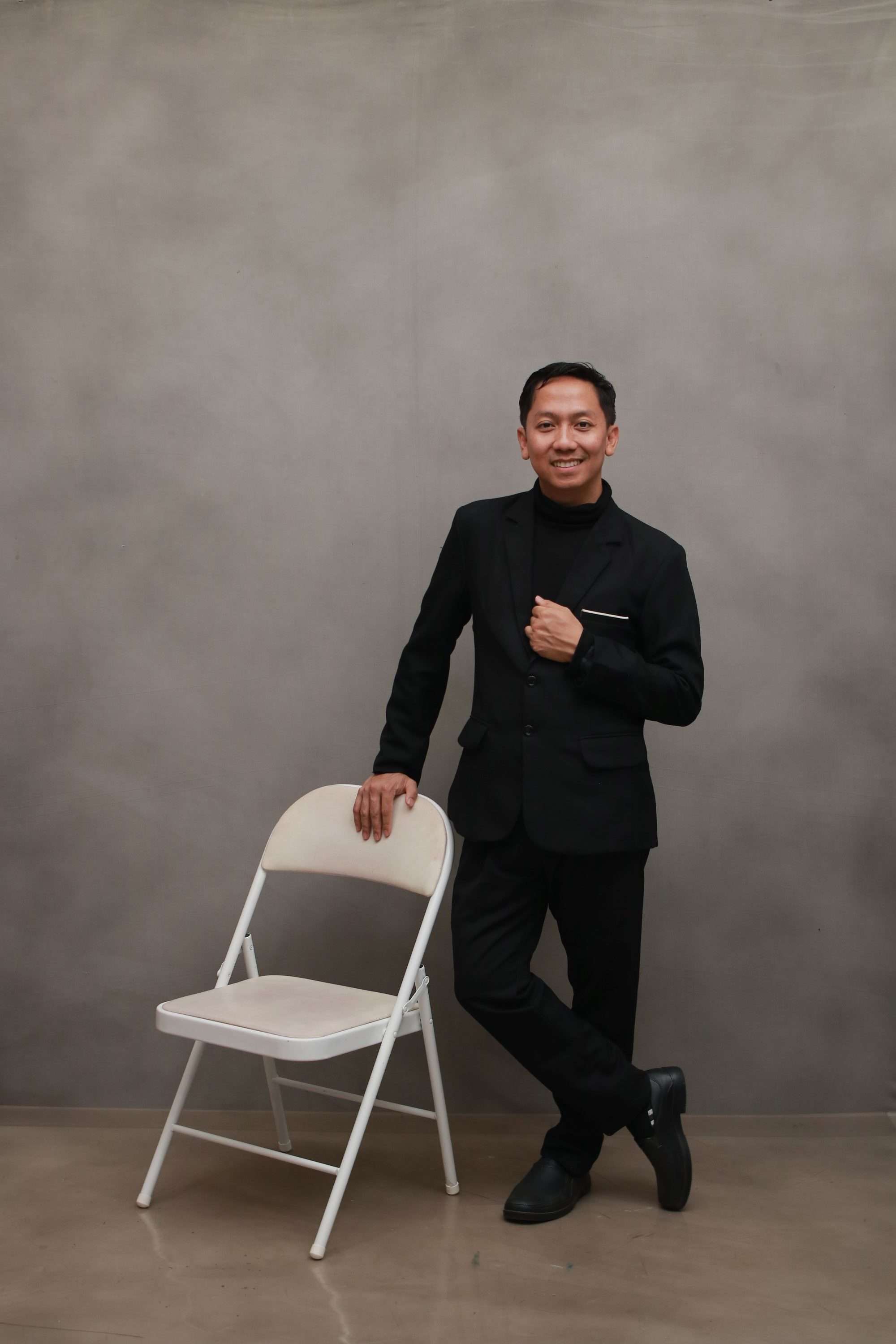

On building a career in U.S. healthcare administration — and creating opportunities for Indonesian professionals.
Let’s start with your name. “Mas Ridwan” — what does that mean, and why has it stuck?
In Javanese culture, “Mas” is a respectful term for an older brother or a man you approach with warmth and respect. As a Javanese, I grew up understanding the meaning behind that word. People began calling me “Mas Ridwan” not because of a title, but because they saw me as someone they could rely on — like an older brother who could share guidance, answer questions, and help them navigate a path I had already experienced myself.
Take me back to the beginning. Where did you grow up, and how did that shape you?
I was born and raised in Trowulan, East Java, Indonesia — once the capital of the Majapahit Empire. Growing up around that history, the temples and the stories of a civilization that once influenced much of the Indonesian archipelago gave me an early appreciation for resilience and the belief that every generation gets the chance to build its own legacy, no matter where it starts.
This July marks twelve years since you arrived in California. How do you think about that stretch of time?
Not just as an immigrant’s journey, but as an education in adaptation. Language, culture, and professional experience — I used to think of those as things you collected for yourself. Over time I realized they can become bridges. They open doors for other people too, especially those without connections or a foothold abroad.
What did those early years in the U.S. actually look like?
Hospitality work. I supervised operations at a California resort. It taught me a great deal about leadership and gave me a foothold in a new country. But seasonal closures also meant months of uncertainty every year, and that instability eventually pushed me to look for a more stable career.
You’ve spoken about losing your mother before you left Indonesia. How did that shape what came next?
She passed away from breast cancer five months before I left. That loss reshaped my sense of purpose long before I understood where it would lead. It’s part of what eventually drew me toward healthcare — not as a physician or nurse, but through the administrative work that quietly supports patient care behind the scenes.
How did you build that career, practically speaking?
I enrolled in Healthcare Administration at Mayfield College and graduated second in my class in 2018. Then I joined an internal medicine practice to learn medical office administration firsthand — electronic medical records, insurance verification, scheduling, referrals, prior authorizations, care coordination. All the detail-heavy work patients rarely see, but every clinic depends on. I became Office Manager in 2022.
And today?
Today, after more than seven years in U.S. healthcare administration, I oversee the daily operations of a California internal medicine practice. Every patient I help is, in some small way, a reminder of my mother. That has stayed with me throughout my career.
What surprised you most about working in the American healthcare system?
How seriously people take their responsibilities. There is real pride and accountability in the work, especially when it comes to protecting patient information and following established processes.
HIPAA is not just something people sign once and forget. Confidentiality and patient privacy are part of the culture. When I first arrived, it took time to understand why every process had a specific rule behind it. Over time, I realized those systems exist for a reason: to protect patients, maintain accountability, and ensure consistency in care.
Another thing that stood out to me was the complexity and cost of healthcare. Healthcare in America can be expensive, and that taught me quickly how important insurance coverage is. Without proper coverage, even a routine visit can become a significant burden for a family.
That’s part of why this administrative work matters to me — helping patients navigate the system and making sure they have the support they need.
In 2025, you published a memoir. What’s the full title, and what does it mean?
Memoar Sang Pemimpi: Perjalanan Anak Buruh Tani Meraih Asa, Cita, dan Cinta di Amerika — Memoir of a Dreamer: A Farm Laborer’s Son’s Journey to Hope, Ambition, and Love in America.
Those three words at the end — asa, cita, and cinta — hope, ambition, and love — aren’t just poetic. They’re really the three things I was chasing, in that order.
Hope got me on the plane. Ambition built the career. And love — for my mother, and for the people I’ve been able to help since — gave the whole journey its meaning.
How did writing it change how you saw your own story?
Writing it meant looking back at every setback and every small victory through a different lens — as the son of a farm laborer, not despite it.
It crystallized something I’d come to believe: success matters most for what it creates for others, not just what it proves about you.
That seems to connect directly to what you built next — Mas Ridwan Academy and IndonesianRemoteWorkers.com. How did those start?
Around the same time I was writing the memoir, I noticed U.S. healthcare providers increasingly hiring remote medical assistants — often from the Philippines, which had already demonstrated how overseas professionals could successfully support American healthcare organizations remotely.
So I asked myself a simple question:
Why not Indonesia?
Why do you think Indonesian professionals hadn’t broken into that space yet?
Not for lack of talent.
What’s missing is access — to U.S. employers, to familiarity with American workplace expectations, and to someone who can show the specific, practical steps needed to get there.
That’s the gap both initiatives were created to help close.
What does the Academy actually teach?
It prepares students for remote careers in medical administration — teaching healthcare terminology, HIPAA compliance, and the day-to-day responsibilities of running an American clinic.
It’s drawn directly from my own experience, the kind of practical knowledge that’s difficult to learn from a textbook. More than fifty students have trained through it so far.
Is the training only for medical roles, or does it go beyond that?
Medical administration is where I have the deepest expertise, so that’s the foundation of what we teach today.
But I don’t see the Academy staying limited to just that. I’m already thinking about where it goes next: English communication, general virtual assistant skills, social media marketing, and other professional training programs.
Nothing I’m ready to announce in detail just yet, but the direction is clear.
Medical administration was the first door I knew how to open. It won’t be the only one.
And IndonesianRemoteWorkers.com?
I launched it in 2026 to connect American employers directly with Indonesian remote professionals, without charging placement or recruitment fees on either side.
Right now, the focus is healthcare administration because that’s where I have the strongest network and experience. But the platform is designed to grow alongside the Academy as we expand into new professional tracks.
We’re still in the early stages, focused on building employer partnerships and creating our first successful placements.
The goal is simple: help Indonesian professionals build meaningful international careers without having to leave behind the families and communities they call home.
You’re also fairly well known online. What’s @tentangamerika about?
It’s an educational platform with a combined audience of more than 240,000 followers across TikTok, Instagram, Facebook, YouTube, and Threads.
I share practical insights about life in America, healthcare careers, immigration, cultural adjustment, and remote work.
A big part of what I do is helping people recognize misinformation and avoid employment scams by encouraging legal, transparent, and well-documented pathways instead of shortcuts that often lead to disappointment.
Looking forward, how do you want people to think about this work?
I don’t think about it in terms of my own success anymore.
I think about possibility — about Indonesian professionals gaining the visibility, preparation, and access they need to compete confidently in the global workforce.
If my journey opened one door for me, I hope it opens many more for Indonesians who simply need the chance to show what they’re capable of.
Hope, ambition, love — dreams become meaningful when they create opportunities for others.
Learn More
Mas Ridwan
http://www.masridwan.us
Personal story, memoir, media appearances, and educational resources.
Indonesian Remote Workers
http://www.indonesianremoteworkers.com
Connecting American employers with qualified Indonesian remote professionals.

