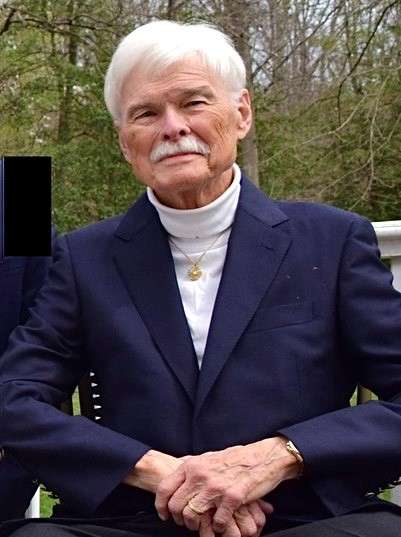

The path of a composer often begins long before the first published work or public performance. For many musicians, early experiences and academic training shape the creative voice that later defines their careers. The life of John Oliver Beall offers a clear example of how strong educational foundations and thoughtful mentorship can guide a composer toward lasting influence. Over the course of several decades, Beall developed a respected career as both a composer and educator, building a legacy that connects his Texas upbringing, advanced musical training, and long academic service at West Virginia University.
Born on June 12, 1942, in Belton, Texas, Beall grew up in a family environment shaped by faith, education, and community life. His father, The Reverend Oliver Otto Beall, Jr., and his mother, Carrie Casey Beall, provided a stable home in which intellectual curiosity and discipline were encouraged. Beall spent his childhood in Belton and Beaumont, two Texas communities that served as the backdrop to his early development. These formative years exposed him to cultural and educational influences that would later guide his interest in music and scholarship.
A major step in Beall’s academic journey came when he enrolled at Baylor University. At Baylor, he began serious study of composition and music theory under the guidance of Richard Willis and Charles Eakin. Both teachers played a meaningful role in helping him refine his understanding of musical structure and creative expression. The university environment allowed Beall to explore composition with discipline while developing the technical skills necessary for professional work in music. His time at Baylor laid the groundwork for the academic and creative achievements that would follow in later years.
Before continuing his graduate education, Beall served four years in the United States Air Force. This period of service added another dimension to his early adult life. Military service provided structure and experience beyond the academic setting, giving him a broader perspective before returning to the world of advanced musical study. When his service concluded, Beall resumed his pursuit of higher education with renewed focus on composition and scholarship.
Graduate study led him to the Eastman School of Music at the University of Rochester, one of the most respected institutions for musical training in the United States. At Eastman, he studied composition with the distinguished American composer Samuel Adler. Working under Adler’s mentorship proved to be a significant turning point in Beall’s artistic development. Adler was known for encouraging originality while maintaining strong discipline in orchestration and compositional form. Under this guidance, Beall expanded his understanding of contemporary composition and strengthened his ability to develop large-scale musical works.
Beall completed his Doctor of Philosophy degree in composition in 1973. His accomplishments during this period were recognized through two of Eastman’s most prestigious awards for composers. He received the Louis Lane Prize and the Howard Hanson Prize, honors that recognized both the quality of his compositions and his promise as an emerging composer. These awards placed him among a select group of students whose work demonstrated exceptional artistic and technical ability.
Following the completion of his doctoral studies, Beall began a professional career in higher education that would span many years. His early teaching positions included appointments at Southwest Texas State University (now Texas State University) and later at Eastern Illinois University. These positions allowed him to develop his approach to teaching composition and music theory while continuing to compose new works. His experiences in these institutions strengthened his role as a mentor to young musicians who were beginning their own creative journeys.
A defining chapter of Beall’s career began in 1978 when he joined the faculty of West Virginia University. At WVU, he became an important part of the School of Music, contributing as both an instructor and a composer. The university environment allowed him to combine academic teaching with active creative work, a balance that became central to his professional identity. Students and colleagues recognized him as a thoughtful teacher who valued careful study of musical craft alongside creative exploration.
During his years at West Virginia University, Beall’s contributions to the academic and cultural life of the institution grew steadily. He eventually served as composer in residence at the university, a role that allowed him to focus on composition while maintaining his connection to teaching and mentorship. His work within the humanities and performing arts was formally recognized in 1990 when he was named the Benedum Distinguished Scholar in the Humanities and Performing Arts. The title acknowledged the depth of his scholarly contributions and the importance of his artistic work within the university community.
Throughout his academic career, Beall continued to compose a wide range of musical works that reflected his evolving artistic voice. His compositions include Sextet for Piano and Winds, written in 1976, and On Chestnut Ridge, composed in 1981. Larger orchestral works followed, including Symphony No. 1 from 1985 and Symphony No. 2, titled Spruce Knob, completed in 2003. His creative output also included chamber music and vocal works such as Wondrous Love from 1999 and Piano Quartet from 2001.
One of his most significant dramatic works is the opera Ethan Frome, completed in 1997. The opera was later staged at the Clay Concert Theatre at West Virginia University as part of the centennial celebration of the WVU School of Music. The production brought together performers, faculty members, and audiences in a performance that highlighted Beall’s ability to translate literary narrative into musical form. After its stage presentation, the opera was broadcast throughout the state on West Virginia Public Television, allowing it to reach a wider audience.
Several major American orchestras and ensembles have also performed Beall’s music. His works have appeared in performances by the Dallas Symphony Orchestra, the Rochester Philharmonic Orchestra, the Pittsburgh Symphony Orchestra, and the United States Marine Chamber Orchestra. These performances introduced his music to audiences across the country and demonstrated the strength of his orchestral writing.
Broadcast exposure further expanded the reach of his compositions. His music has been aired on National Public Radio and on radio stations in Hong Kong, Germany, France, and Spain. Through these broadcasts, his work reached listeners far beyond the universities and concert halls where it was first performed.
After many years of teaching and composing at West Virginia University, Beall retired from the faculty in 2014. In recognition of his decades of dedication to teaching, composition, and scholarship, the university named him Professor Emeritus. The title reflects both the respect he earned from colleagues and the lasting influence he had on generations of students.
Beyond his professional life, Beall maintains a strong commitment to family. He is married to Carol Jean Allen, and together they have two children, Katherine Elizabeth Beall and Stephen John Beall, along with three grandsons. His family life has remained an important foundation throughout a career defined by creativity, scholarship, and education.
The educational journey of John Oliver Beall demonstrates how disciplined study, meaningful mentorship, and long-term dedication to teaching can shape a remarkable career. From his early years in Texas to his decades of influence in higher education, his work continues to represent a thoughtful blend of academic excellence and artistic creativity.

