
Artist Amplified
The Music Artist’s Guide to Packaging Your Brand for Record Labels and Viral Discovery

Record labels no longer sign "potential." They sign proven products. If you want a record deal or viral growth in 2026, you must package your brand as a complete, scalable business.
Are you ready to move from being an independent creator to a professional artist brand?
Follow this guide to structure your identity, build your assets, and implement a discovery engine that attracts both fans and industry executives.
1. Define Your Core Brand Strategy
Your brand is the story fans and labels tell about you. Without a defined strategy, your marketing will feel scattered.
- Write your mission statement. State why you create music and what specific impact you want to have on your listeners.
- Identify your target audience. Determine the age, location, and interests of your ideal fans. Identify what other artists they listen to.
- Choose your brand archetype. Select a persona that fits your personality, such as the Rebel, the Visionary, or the Outcast. This ensures consistency in your storytelling.
- Define your brand personality. Choose five adjectives that describe your vibe. Use these to guide every visual and written piece of content you produce.
- Establish your Unique Selling Proposition (USP). Identify the one thing that makes your sound or story non-interchangeable with anyone else in your genre.
2. Develop Your Visual Asset Library
Labels look at your visuals before they listen to your music. You need a cohesive brand kit that looks professional on every platform.
- Design a primary logo. Create a high-resolution logo and a simplified icon version for social media profiles and merchandise.
- Select a color palette. Choose 3–5 core colors. Use these consistently across your cover art, wardrobe, and social media graphics.
- Choose your typography. Select two fonts: one for headings and one for body text. Stick to these for all promotional materials.
- Shoot professional press photos. You need high-resolution images in both portrait and landscape orientations. Ensure your clothing and location match your brand personality.
- Create a cover art system. Design a template or recurring visual element for your singles so your discography looks unified on streaming platforms.
- Show your studio environment. Include images that reflect a professional recording setup so labels can quickly see that your brand presentation matches your work ethic.

3. Build Your Electronic Press Kit (EPK)
An EPK is your professional resume. It must be organized, accessible, and data-driven to convince a label that you are a low-risk investment.
- Host your EPK online. Use a dedicated page on your website or a professional PDF.
- Write two bios. Create a one-paragraph version for quick reading and a longer version that details your story and major milestones.
- Feature your focus tracks. Embed your top three songs. Highlight their streaming numbers and any notable playlist placements.
- Include a "Social Proof" section. List your follower counts, monthly listeners, and engagement rates. Labels prioritize artists who already have an active community.
- Add a download link for high-res assets. Provide a single link to a cloud folder containing your press photos, logos, and music files for journalists and curators.

For professional assistance in building these assets, you can view our services or browse our gallery to see successful branding examples.
4. Implement Your Viral Discovery Engine
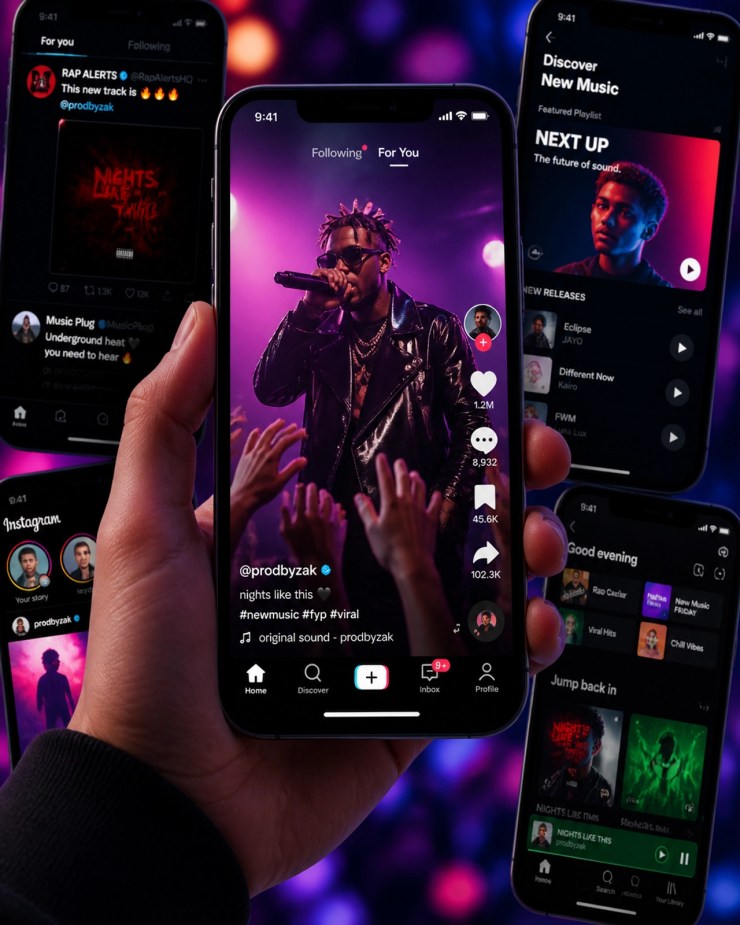
Virality is not luck; it is a volume game. You must create a system that feeds social media algorithms daily to increase your chances of discovery.
- Pick your primary platforms. Focus on TikTok, Instagram Reels, and YouTube Shorts for short-form video discovery.
- Batch-create content. Spend one day a week filming 20–30 short clips for a single song release.
- Use the "Hook-Body-CTA" format. Start every video with a visual or auditory hook in the first 3 seconds. End with a clear call to action, like "Pre-save my new song."
- Vary your content angles. Don't just post music videos. Post "behind-the-scenes" footage, story-time videos about your lyrics, and acoustic versions of your hooks.
- Respond to every comment. High engagement in the first hour of posting signals the algorithm to push your video to more people.
5. Prepare for Record Label Outreach
Once your brand is packaged and your discovery engine is running, you are ready to approach labels or attract their scouts.
- Audit your digital footprint. Ensure your Instagram, TikTok, and Spotify profiles all use the same profile picture and link to the same destination.
- Organize your metadata. Keep a spreadsheet of your ISRCs, writer credits, and publishing information. Labels require this for any potential deal.
- Document your growth. Take screenshots of your analytics peaks during viral moments. Use these to show momentum in your outreach emails.
- Network at industry events. Attend showcases and conferences. Bring high-quality physical assets, like branded merchandise, to leave a lasting impression at regional events like Power 99 showcases.
- Monitor your direct messages. Label A&Rs often reach out via Instagram DM or email before making a formal offer.

6. Your 30-Day Execution Plan
Follow this schedule to complete your brand packaging and start your discovery cycle.
Days 1–7: Strategy and Branding
- Complete your brand strategy document.
- Finalize your logo and color palette.
- Book a professional photoshoot.
Days 8–14: Asset Creation
- Receive and select your best press photos.
- Build your EPK page.
- Update all social media banners and bios.
Days 15–21: Content Preparation
- Write 20 video scripts for your next release.
- Film and edit all 20 videos.
- Upload your music to distributors.
Days 22–30: Discovery Launch
- Post daily on TikTok and Reels.
- Email your EPK to 10 relevant curators or bloggers.
- Track your analytics and adjust your content based on what performs best.
Success in the music industry requires a balance of creative talent and business precision. If you treat your brand like a professional product, the industry will treat you like a professional artist.
If you need help scaling your brand or managing your music rollout, you can book a consultation online with the Stackin Up Ent team. We are here to help you stack your success.
{“name”:”How to Package Your Music Artist Brand for Record Labels”,”step”:[{“name”:”Define Brand Strategy”,”text”:”Identify your mission, audience, archetype, and unique selling proposition to create a consistent brand story.”,”@type”:”HowToStep”},{“name”:”Develop Visual Assets”,”text”:”Create a brand kit including a logo, color palette, professional typography, and high-resolution press photos.”,”@type”:”HowToStep”},{“name”:”Build an EPK”,”text”:”Assemble an Electronic Press Kit featuring your bio, focus tracks, social media analytics, and a downloadable asset link.”,”@type”:”HowToStep”},{“name”:”Launch a Viral Discovery Engine”,”text”:”Batch-create short-form video content for platforms like TikTok and Reels using repeatable hooks and narrative angles.”,”@type”:”HowToStep”},{“name”:”Prepare for Outreach”,”text”:”Audit your digital profiles, organize your song metadata, and document your growth for record label A&R scouts.”,”@type”:”HowToStep”}],”@type”:”HowTo”,”@context”:”https://schema.org”,”totalTime”:”P30D”,”description”:”A comprehensive guide for music artists to build a professional brand identity, create an EPK, and implement viral discovery strategies to attract record labels.”,”estimatedCost”:{“@type”:”MonetaryAmount”,”value”:”Varies”,”currency”:”USD”}}

