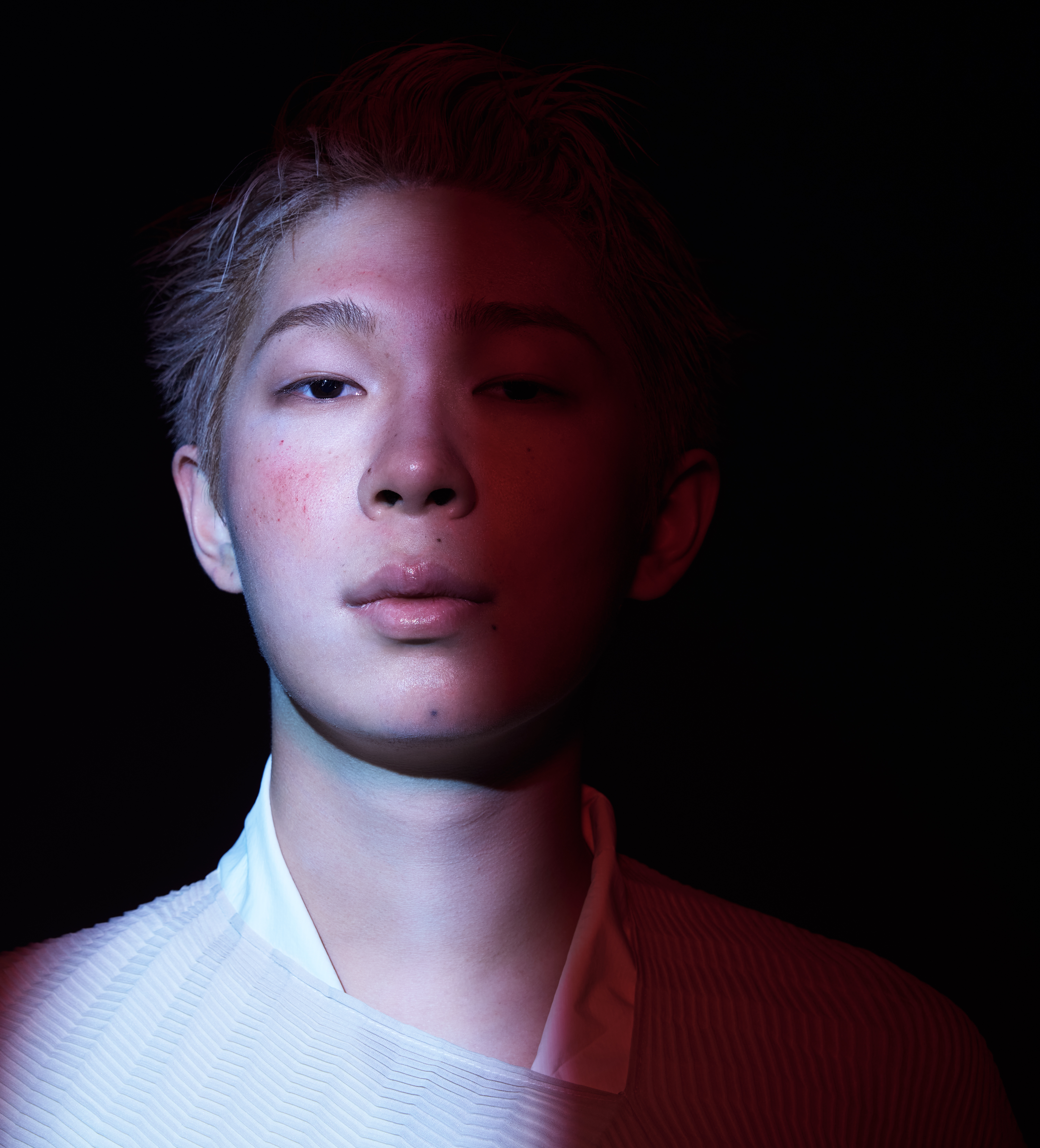

RVRIE (pronounced “reverie”), the project of Beijing-based producer, songwriter, and sound designer Zefan Gao, approaches music with the precision and perspective of a filmmaker. His debut album Reverie moves through ambient pop and alternative rock, unfolding as a deeply introspective work shaped by memory, displacement, and the quiet effort of understanding one’s own identity.
Formally trained in classical piano from the age of four, Gao carries that early discipline into his production practice, even as his sound stretches into expansive, cinematic terrain. Yet beneath the layered design and atmospheric detail lies a more direct intent. “I wanted these to be good songs apart from the sound design work that I normally do,” he says. “The album is about getting over a sense of loss and nostalgia by fully immersing yourself in it one last time.”
That idea of immersion—of moving through emotion rather than around it—runs through Reverie. Gao’s formative years were split between two sharply different worlds: Y2K-era China and a structured Quaker school experience in the United States. The contrast left its mark. “I went to the U.S. for school at fifteen and everything moved so quickly, I never had time to process anything,” he reflects. “Writing this album was the first time I really connected with my past self. I couldn’t move forward until I did.”
The album’s lead single, Dark Waters, distills that emotional current into something stark and immersive. Inspired in part by the video game Death Stranding and its “BTs” (Beached Things)—invisible entities that pull the living into the depths—the track reframes nostalgia as an unseen force, something both magnetic and destabilizing. It lingers just beneath the surface, waiting for a moment of stillness to take hold.
Elsewhere on Reverie, Gao expands the record’s emotional and sonic palette with a series of tracks that move between restraint and release. Winter Sun stands out as an expansive, emotive piece, built on atmospheric instrumentation and powerful vocal delivery that gives the track a minimal framework its own quiet sense of scale. Watch the Moon Growtakes a more intimate turn, unfolding through poignant, bittersweet piano lines and haunting vocals that linger long after the song ends. In the Arms of My Nightmare pushes further outward again, showcasing RVRIE’s versatility through layered orchestral textures and dynamic, infectious vocal melodies that balance intensity with control.
To deepen its sonic landscape, RVRIE brought in a roster of acclaimed collaborators, including bassist Tim Lefebvre, known for his work on David Bowie’s Blackstar, and jazz saxophonist Nathan Gao. Their contributions expand the track’s language, pulling it into a space where avant-jazz textures, ambient pop, and alternative rock converge without friction. The result is cinematic without excess, detailed without losing emotional clarity.
With Reverie, RVRIE introduces a debut shaped by careful construction and emotional honesty—an album that treats memory not as something to escape, but something to move through, reshape, and ultimately understand.
Connect with RVRIE on Instagram HERE.

