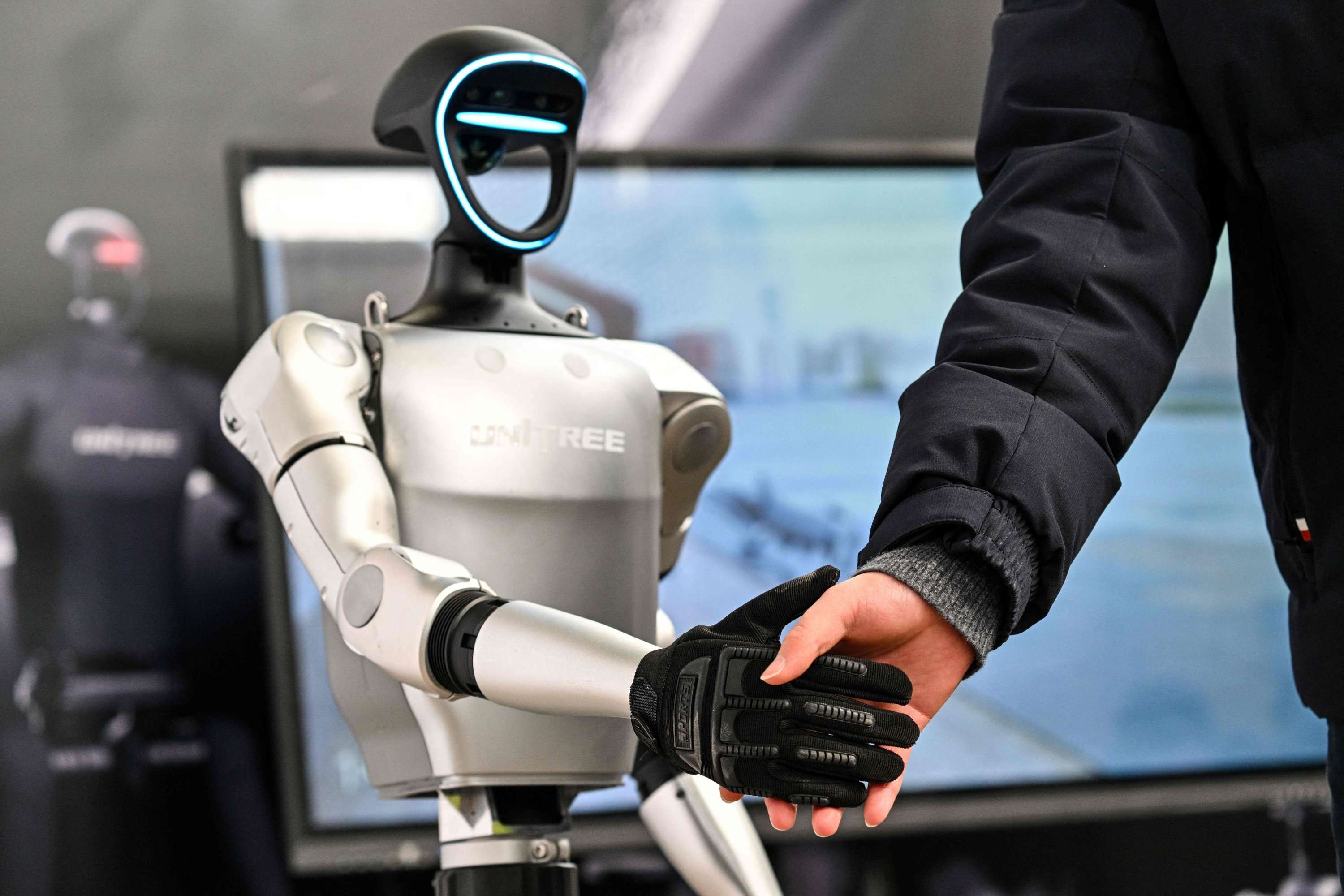

The robot revolution didn’t arrive with chrome-plated androids knocking on your door. It slipped in quietly—mapping your living room, learning your routines, and nudging its way from novelty gadget to something more intimate.
In 2026, the home robot is no longer a futuristic promise. It’s a fragmented reality: part assistant, part appliance, part experiment. And it’s evolving faster than most people realize.
The Breakthrough Wasn’t Hardware. It Was Understanding
For decades, robotics stalled on a simple problem: homes are unpredictable.
Unlike factories, where everything is controlled, homes are chaotic ecosystems—laundry piles move, lighting changes, pets interfere, and humans behave inconsistently. Early robots failed not because they couldn’t move, but because they couldn’t understand.
That’s changed.
Modern systems powered by advances in machine learning and computer vision can interpret environments in real time. They don’t just detect objects—they infer context. A chair isn’t just a chair; it’s something that might be moved, sat on, or in the way. A pile of clothes isn’t clutter—it’s a task.
The result is a new generation of robots that don’t just execute commands. They adapt. They observe. They learn your habits, sometimes faster than you expect.
From Single-Task Tools to General-Purpose Machines
The biggest shift in home robotics isn’t what robots can do. It’s how many things they’re trying to do at once.
The first wave of consumer robots was narrow: vacuuming, mowing lawns, maybe delivering a video feed from your hallway. Useful, but limited.
Now, companies are chasing general-purpose robots—machines designed to operate more like humans, capable of performing a range of household tasks. Folding laundry. Loading dishwashers. Picking up objects. Even assisting in the kitchen.
Humanoid prototypes are at the center of this push. Their appeal isn’t just aesthetic—it’s practical. Homes are built for human bodies, which means a robot shaped like a human can theoretically interact with the environment more naturally.
But there’s a gap between theory and reality.
Watch one of these robots attempt to fold a shirt, and you’ll see progress—but also hesitation. Movements are deliberate, sometimes clumsy. Tasks take minutes that would take a person seconds. It’s less like watching a machine, and more like watching a beginner learning by trial and error.
Which, in a way, it is.
The Machines That Actually Work Don’t Look Like Us
While humanoid robots dominate headlines, the most effective home robots remain unapologetically un-human.
Specialized machines are where real progress is happening:
Robot vacuums that map entire homes and adapt cleaning patterns dynamically
Devices equipped with simple robotic arms that can move obstacles before cleaning
Autonomous systems that handle niche tasks like pool maintenance or security patrol
These machines succeed because they’re focused. They don’t try to replicate human behavior—they optimize for specific outcomes.
And that raises a subtle tension in the industry:
Is the future of home robotics about building machines that look like us, or machines that simply work better than we do?
Right now, the latter is winning.
The Emotional Layer: When Robots Stop Being Tools
There’s another shift happening, one that has less to do with mechanics and more to do with psychology.
A growing category of home robots isn’t designed to clean or cook—it’s designed to connect.
These machines behave less like assistants and more like companions. They respond to tone, movement, and presence. Some mimic pet-like behavior, using subtle motions and reactions to create the illusion of awareness.
The goal isn’t efficiency. It’s attachment.
This is where robotics begins to blur into something more complex. A vacuum that maps your home is a tool. A machine that reacts when you enter the room, that seems to recognize you, that develops patterns of behavior—that starts to feel like something else entirely.
Not quite alive. But not entirely inert, either.
The Awkward Phase of the Future
Despite rapid progress, home robotics is still in an in-between stage.
Robots can perform impressive tasks, but often inconsistently. They can assist, but not fully replace. They can learn, but not always predict.
And they’re expensive. Advanced systems remain out of reach for most households, positioning them closer to luxury experiments than everyday essentials.
In practical terms, today’s home robot is less “fully capable assistant” and more “intern with potential.” It can help, but it still needs supervision. It improves over time, but it’s not yet seamless.
What the Next Few Years Will Decide
The trajectory is clear, even if the outcome isn’t.
Over the next several years, home robots will either:
Fade into the background as invisible infrastructure, like Wi-Fi or electricity
Remain high-end status symbols with limited practical use
Or evolve into something entirely new: integrated presences that participate in daily life
The difference will come down to three things: reliability, affordability, and trust.
Because once a robot can move through your home effortlessly, understand your routines, and respond in ways that feel intuitive, it stops being a device.
It becomes part of the environment.
The Real Shift
The most important change isn’t that robots are entering homes.
It’s that homes are being redesigned—physically and digitally—to accommodate them.
We are beginning to live in spaces that machines can understand.
And once that happens, the question is no longer whether robots belong in the home.
It’s how much of the home we’re willing to share.

