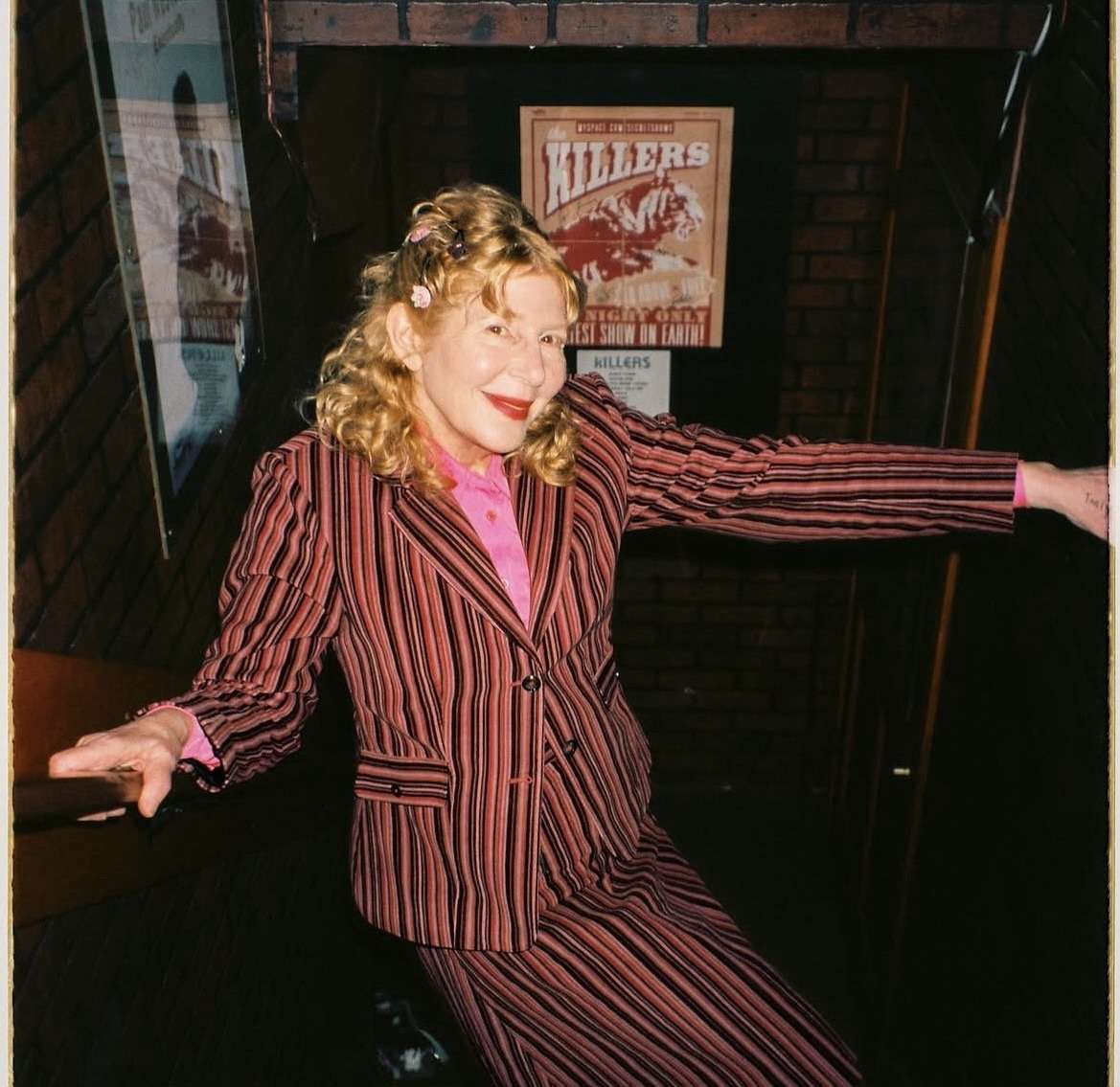

There’s something quietly radical happening on Instagram—and it doesn’t look like the algorithm-chasing, hyper-polished content we’ve all been trained to expect.
It looks like Blond in Car.
With a retro Omnichord resting in her lap, sparkles flickering across the screen, and a voice that feels somewhere between lullaby and transmission from another dimension, she’s built a following not by chasing trends—but by ignoring them entirely. In a feed dominated by speed, youth, and perfection, Blond in Car is something else entirely: slower, stranger, softer… and undeniably magnetic.
There’s something quietly radical happening on Instagram—and it doesn’t look like the algorithm-chasing, hyper-polished content we’ve all been trained to expect.
The Omnichord Oracle
At the center of her sound is the Omnichord—a niche, almost toy-like instrument from another era. In anyone else’s hands, it might feel gimmicky. In hers, it feels spiritual.
Her performances don’t just sound like songs—they feel like moments suspended in time. There’s an unfiltered intimacy to them, like you’ve stumbled into a private ritual disguised as a Reel. The aesthetic is lo-fi but intentional, whimsical but grounded. And her voice—often described by fans as “angelic”—floats above it all, delivering lyrics that are disarming, sometimes humorous, and often deeply personal.
“Bad Dad” and the Power of Saying It Out Loud
Her latest release, “Bad Dad (feat. Mannequin Pussy),” pushes that vulnerability even further.
The track blends her signature dreamy tone with sharper emotional edges, tackling complicated family dynamics with a kind of honesty that feels almost uncomfortable—until it becomes liberating. It’s not polished pain. It’s processed pain. And that distinction matters.
The song has quickly become a talking point across her audience, not just because of its sound, but because of what it represents: permission. Permission to speak, to reflect, to reclaim narratives that people are often told to keep quiet.
A Viral Presence That Feels Human Again
What’s perhaps most striking about Blond in Car isn’t just her music—it’s her presence.
In an ecosystem that often sidelines anyone outside a narrow age bracket, she’s become a viral breath of fresh air. Not despite her age—but because of it.
She’s openly shared that in her younger years, she held back. Fear of judgment. Fear of how she’d be perceived. Fear of stepping outside expectations. The kind of fear that quietly edits people into smaller versions of themselves.
Now? That fear is gone.
And what replaced it is something far more compelling: freedom.
There’s a kind of joy in her content that doesn’t feel performative. It feels earned. Whether she’s singing in her kitchen, sitting in a diner booth with her Omnichord, or delivering a line that lands somewhere between playful and profound, there’s a consistent message underneath it all:
You don’t age out of self-expression.
Rewriting the Timeline
Blond in Car isn’t just building an audience—she’s reshaping a narrative.
For decades, the internet has operated on an unspoken rule: youth equals relevance. But her rise challenges that entirely. She’s proving that creativity doesn’t expire. That reinvention isn’t reserved for the young. That sometimes, the most authentic version of someone shows up later—after the noise, after the doubt, after the pressure to conform.
And maybe that’s why people are connecting so deeply.
Because in a world that constantly tells you to rush, optimize, and perform… she’s doing the opposite.
She’s taking her time.
She’s being herself.
And somehow, that’s exactly what the algorithm—and the culture—needed.
If there’s a takeaway from Blond in Car’s rise, it’s not just about music or virality. It’s about timing—not the kind dictated by trends, but the kind dictated by personal readiness.
Or, more simply:
It’s never too late to become who you were always meant to be.


