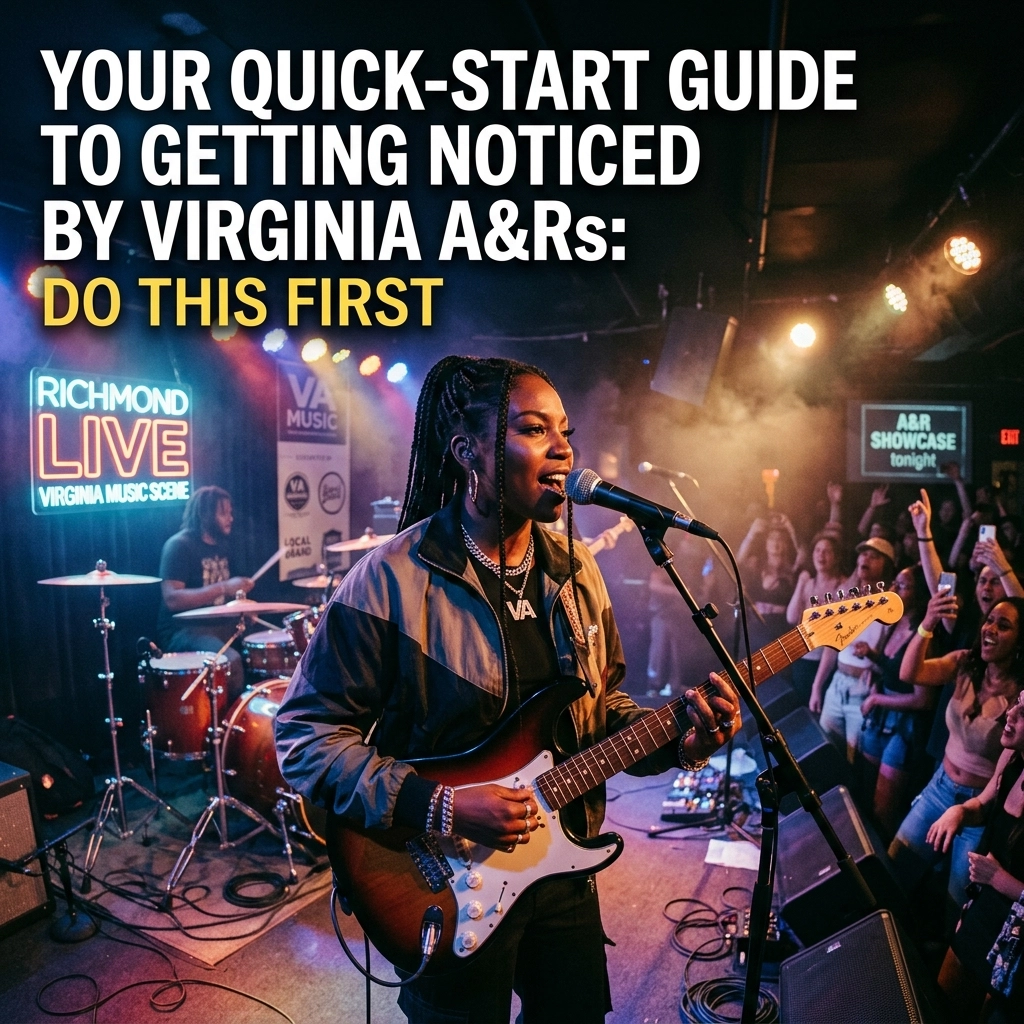

You are making music in Virginia. You have talent and you have a drive to succeed. However, your emails to labels go unanswered and your social media tags are ignored. You want to know how to get an A&R representative to actually listen to your tracks. Are you ready to stop shouting into the void and start building a professional presence that demands attention?
Getting noticed by an A&R (Artists and Repertoire) professional in 2026 requires more than just a good song. It requires a strategy. Labels no longer look for raw talent that needs years of development. They look for finished products and established brands. Follow these steps to move your music from your bedroom to the boardroom.
1. Professionalize Your Sound Immediately
You cannot send unpolished demos to industry professionals. The standard for independent music has shifted. A&Rs expect studio-quality production on the first listen. If your vocals are muddy or your beat is clipping, they will stop the track within five seconds.
Invest in high-end recording equipment or book time at a professional studio. Ensure your tracks are mixed and mastered by someone who understands your genre. A&Rs listen for "radio readiness." If your song does not sound as loud and clear as the top tracks on a Spotify editorial playlist, it is not ready for submission.
Record multiple versions of your best songs. Have clean edits and instrumentals ready. This shows you understand the business side of licensing and radio play. High-quality audio is your entry ticket. Without it, the rest of your strategy will fail.

2. Master Your Social Search Presence
A&Rs use social media as their primary scouting tool. They look for artists who already have a "proof of concept." This means you need a following that interacts with your content. You must optimize your profiles for social search.
Use relevant keywords in your bio. Include "Virginia Artist" or your specific city like Richmond, Norfolk, or Virginia Beach. This helps A&Rs find you when they are looking for regional talent. Post consistently but prioritize quality. Short-form video content is the best way to showcase your personality and your music simultaneously.
Track your data. Know which videos are getting shared and where your listeners are located. When you eventually pitch to an A&R, having data to back up your claims makes you a low-risk investment. Check out how local artists are doing this by visiting our gallery to see successful visual branding in action.
3. Network Within the Virginia Scene
The music industry is built on relationships. You are more likely to get noticed if someone the A&R trusts recommends you. Start building your network locally. Attend every relevant industry event, open mic, and showcase in the Virginia area.
Do not just show up to perform and leave. Stay to talk to the organizers, the DJs, and the other artists. Be genuine. Don't lead with a request; lead with value. Support other artists' shows and share their music. This builds a community around you.
Stackin Up Ent hosts events designed to bridge the gap between local talent and industry eyes. For example, attending an event like the Empire Distribution Song Review gives you a direct line to professional feedback. You can also see how live energy works by checking out shows like Yung Shah w/ DJ Maco or Teflon T. Being physically present in the scene makes you a real person, not just another link in an inbox.

4. Create a High-Impact EPK
An Electronic Press Kit (EPK) is your professional resume. It should be a single link that contains everything an A&R needs to evaluate you. Stop sending individual files or messy Google Drive links.
Your EPK must include:
- A Short Bio: Focus on your achievements and your unique sound. Keep it under 200 words.
- High-Quality Photos: Use professional press shots, not selfies.
- Your Top 3 Tracks: Put your strongest song first. Use an embedded player like SoundCloud or Disco.
- Music Videos: Link to high-quality YouTube videos that show your visual brand.
- Social Proof: Include screenshots of your best streaming numbers or social media engagement.
- Contact Information: Make it easy for them to reach you or your management.
Keep the design clean and professional. A messy EPK suggests a messy artist. If you need help building your professional brand or managing your marketing, look into our marketing services.
5. Perfect the Cold Pitch
When you finally have the music, the numbers, and the EPK, you can reach out to A&Rs. But you must do it correctly. Never send a mass email. Research the specific A&R. Look at who they have signed recently. If they only sign country artists and you make drill, do not email them.
Keep your email brief and matter-of-fact:
- Subject Line: Use a clear format like "Artist Submission: [Your Name] – [Genre] – [Key Achievement]."
- The Hook: Mention why you are emailing them specifically. Mention a recent signing of theirs that you admire.
- The Value: State one major achievement (e.g., "Recently hit 50k streams on Spotify" or "Opened for [Major Artist]").
- The Link: Provide one link to your EPK. Do not attach large files.
- The Close: Thank them for their time and leave it at that.
Do not follow up every day. If they are interested, they will reach out. If they don't respond, keep building your brand and try again in three months with a new achievement to report.

6. Perform Live and Build a Street Team
Live performance is the ultimate test of an artist. A&Rs want to see if you can command a room. Start booking local shows. Even small venues in Virginia are important for building your "stage legs."
As you play more shows, build a street team. These are dedicated fans who help promote your music, hand out flyers, and buzz about your upcoming releases. A grassroots movement is impossible for a label to ignore. When an A&R sees a line of people around the block for a Virginia artist they haven't signed yet, they start asking questions.
Check out past performances like Lil Kevo w/ BD Vic or Fleekmane, Guno, & KD to see the level of energy required for a successful local show. Live shows are also great opportunities to capture high-quality video content for your social media.
7. Be Consistent and Patient
The "overnight success" is a myth. Most artists who get signed have been working for years. Stay consistent with your releases and your content. A&Rs look for reliability. They want to see that you will continue to work hard after they give you a contract.
Set a schedule for your music releases. Aim for a new single every 6 to 8 weeks. This keeps your audience engaged and gives you regular "news" to share with your network. Use each release as an opportunity to reach out to new press outlets, playlists, and industry professionals.

8. Focus on Revenue Growth
A&Rs are essentially talent scouts for a business. If you can show that your music is already generating revenue, you become an incredibly attractive prospect. Whether it is through merchandise sales, ticket sales, or streaming royalties, document your growth.
Treat your music career like a startup. Manage your expenses and reinvest your earnings back into your craft. When you talk to a label, talk in terms of growth and scalability. Show them that you have a system in place and that their investment will simply act as fuel for an already moving vehicle.
9. Utilize Professional Guidance
Navigating the Virginia music scene alone is difficult. Sometimes you need a team that already has the connections and the expertise to put you in the right rooms. Seeking professional marketing and management advice can shave years off your learning curve.
At Stackin Up Ent, we specialize in helping artists scale their presence and professionalize their approach. From event opportunities like The Clap w/ Sellfone to comprehensive marketing strategies, we provide the tools you need to get noticed.
If you are ready to take the next step in your career and want a team to help you navigate the path to an A&R meeting, we are here to assist. You can book a session online to discuss your specific goals and how we can help you achieve them.
How can I help you move forward with your music career today?

