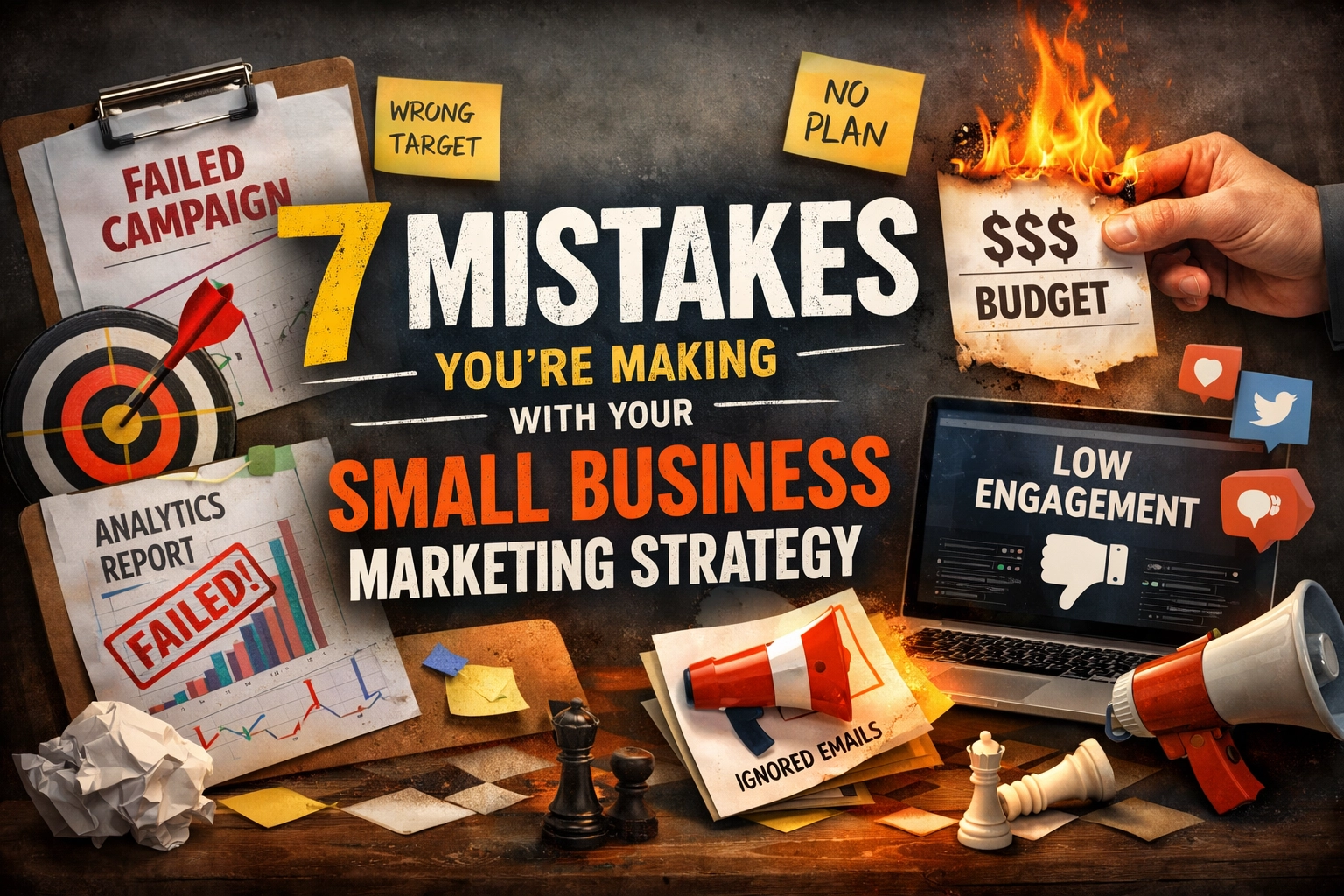

You are pouring time, energy, and money into your small business, but your sales numbers aren’t budging. Are you wondering why your marketing efforts feel like shouting into a void? Many small business owners fall into the same traps that prevent them from scaling.
Marketing is the engine of your business growth. When that engine is misaligned, you waste fuel and stay stuck in the same place. To fix this, you must identify where your strategy is breaking down.
Follow these steps to identify the seven most common marketing mistakes and learn exactly how to fix them to get your brand the attention it deserves.
1. Operating Without a Dedicated Website
You might think a Facebook page or an Instagram profile is enough to represent your business online. This is a critical error. Relying solely on social media means you are building your house on rented land.
Search engines like Google prioritize dedicated websites over social media profiles for many local searches. If you don’t have a website, you are invisible to a massive segment of your potential audience. A website provides instant credibility. It is where you control the narrative, showcase your professional brand, and host essential contact information.
How to fix it:
Build a professional, mobile-responsive website immediately. It doesn’t need to be complex, but it must be functional. Ensure it highlights your services and gives visitors a clear path to contact you. If you need a professional touch to get started, explore our marketing services to see how we build high-converting digital foundations.
2. Lacking a Documented Marketing Plan
Are you posting to social media only when you remember? Or running an ad only when sales are slow? Jumping into marketing without a documented plan leads to scattered messaging and wasted budget. Without a roadmap, your marketing is reactive rather than strategic.
A marketing plan defines your goals, your budget, and the specific actions you will take to reach your target audience. It keeps your messaging consistent across all platforms, which is vital for building trust with your customers.
How to fix it:
Sit down and write out your strategy for the next six months. Define your primary goal: whether it’s lead generation, brand awareness, or direct sales. Map out which channels you will use and how often you will post or run campaigns. Consistency is the key to conversion.

3. Taking an Unfocused “Shotgun Approach”
You cannot be everything to everyone. Trying to market to “everyone” usually ends up appealing to no one. This “shotgun approach” is one of the most expensive mistakes a small business can make. You end up spending money to reach people who have zero interest in what you offer.
Marketing is most effective when it is highly targeted. You need to speak the language of the specific people who have the problem your business solves.
How to fix it:
Identify your “Ideal Customer Profile.” Who are they? Where do they hang out? What are their pain points? Focus your marketing dollars exclusively on the platforms and demographics where these people spend their time. Narrowing your focus actually widens your profit margins.
4. Failing to Conduct Proper Customer Research
Do you know why your customers choose you over the person down the street? If you are guessing, you are losing money. Many small business owners assume they know what their customers want, but they rarely take the time to ask or look at the data.
Without research, you can’t build a campaign that resonates. You might be highlighting “low prices” when your customers actually care more about “fast delivery” or “extended warranties.”
How to fix it:
Conduct simple surveys or look at your existing customer data. Ask your best clients what they like most about your service. Use these insights to craft your marketing copy. If you want to see how data-driven strategy works in action, check out how we handle Empire Distribution song reviews to help artists understand their market positioning.

5. Neglecting Your Unique Selling Proposition (USP)
In a crowded market, being “good” isn’t enough. You have to be different. If a potential customer looks at your business and a competitor’s business and can’t see a clear reason to pick you, they will choose based on price alone. This leads to a “race to the bottom” that hurts your revenue.
Your USP is the one thing you do better or differently than anyone else. It should be the core message of every ad, email, and social media post you create.
How to fix it:
Complete this sentence: “My customers buy from me instead of the competition because _________.” If you can’t answer that in ten words or less, you need to refine your USP. Once you have it, put it front and center on your website and marketing materials.
6. Ignoring Marketing Analytics and Performance
You can’t manage what you don’t measure. Many business owners keep spending money on ads or content without ever checking if those efforts are actually producing a return on investment (ROI).
Are your leads coming from Google, Instagram, or word of mouth? If you don’t know, you might be over-investing in a dead channel and under-investing in your gold mine. Data-driven decisions are the only way to optimize a small business budget.
How to fix it:
Set up basic tracking tools. Use Google Analytics for your website and use the built-in insights tools on social media platforms. Track which campaigns lead to actual clicks and conversions. Review these numbers at the end of every month and adjust your spending accordingly.

7. Forgetting About Customer Retention
It costs significantly more to acquire a new customer than it does to keep an existing one. Yet, most small businesses spend 90% of their marketing budget on reaching new people while completely ignoring the people who have already bought from them.
Ignoring your existing customers is leaving money on the table. Loyal customers are more likely to buy again, spend more per transaction, and refer their friends to your business.
How to fix it:
Start an email marketing list. Collect emails at the point of sale and use them to send updates, special offers, and helpful content. Treat your current customers like VIPs. Keeping them engaged ensures a steady stream of “warm” revenue that doesn’t require a high ad spend to maintain.

Scaling Your Business the Right Way
Correcting these seven mistakes will immediately put you ahead of most of your competition. Marketing doesn’t have to be a mystery. It is a repeatable process of reaching the right people with the right message and measuring the results.
Stop guessing and start building a strategy that actually works. If you are ready to take your marketing to a professional level and stop making these common errors, we are here to help. At Stackin Up Ent, we specialize in helping small businesses and artists find their voice and grow their revenue through targeted marketing and media production.
Visit our homepage to learn more about our philosophy, or if you’re ready to get started right now, you can book an appointment online to speak with our team.
Do you have questions about how to implement these changes in your specific industry? Let us know how we can help you scale.

