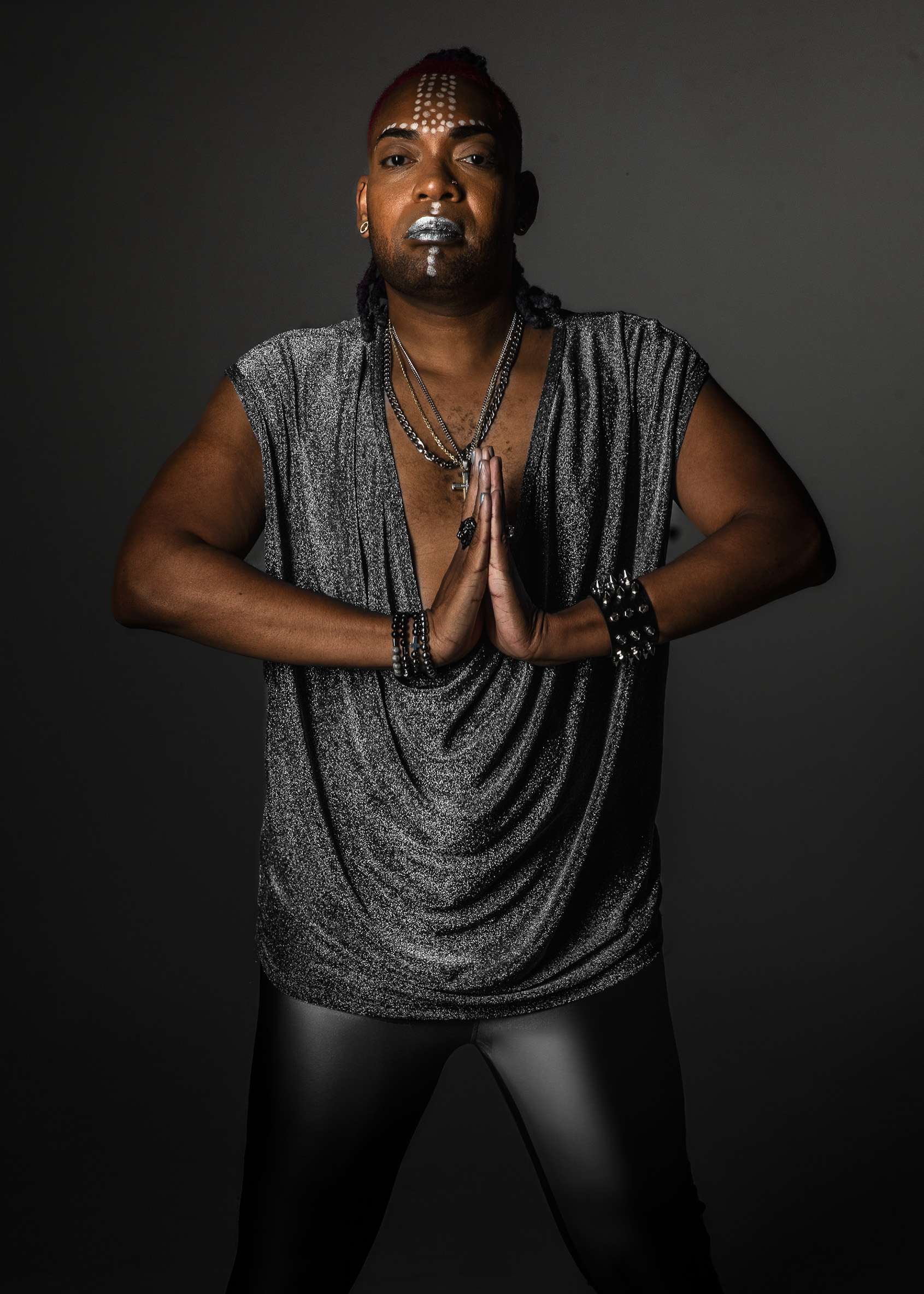

In a genre built on truth-telling, few artists embody lived experience as fully—and as fearlessly—as I.K.P.. Born Kenny M. Alvarez and known artistically as The Infamous King of Positivity, I.K.P. is a non-binary rapper-producer of Garifuna descent whose work fuses mythic storytelling with hard-earned reality. Their catalog doesn’t just narrate survival; it reframes it—transforming trauma into testimony and resilience into a legacy.
Before music became a calling, discipline and service shaped I.K.P.’s foundation. As a veteran of the United States Marine Corps, they carry the weight of military trauma—an experience that later collided with homelessness and substance abuse. These chapters aren’t footnotes; they’re the bedrock of an artistic voice that refuses to sanitize struggle. Instead, I.K.P. renders it with clarity, purpose, and a radical insistence on hope.
That insistence is audible across a catalog that feels both ancient and immediate. Independent projects like 11:11 | eleven eleven read like modern myth—ritualistic, symbolic, and deeply personal. The music leans into duality: pain and pride, grit and grace, chaos and calm. Each release expands a universe where identity is fluid, truth is non-negotiable, and positivity is not naïveté but a hard-won stance against erasure.
Craft meets conviction. After formal training at Full Sail University, I.K.P. honed a sound that’s as intentional as it is emotive. Beats are sculpted with a producer’s precision; bars land with a poet’s patience. The result is hip-hop that doesn’t chase trends—it builds worlds. Recognition followed, including an Independent Music Award nomination that affirmed the impact of an uncompromising independent vision.
But I.K.P.’s influence stretches far beyond the studio. From 2020 to 2024, they co-hosted The Herbal Tea Podcast, a space that bridged queer identity, pop culture, and cannabis advocacy with warmth and wit. The show became a community hub—part conversation, part education, part healing—reflecting I.K.P.’s belief that culture is a tool for connection and change.
That belief shows up in action. In New York, I.K.P. successfully lobbied for millions in funding toward supportive housing—an achievement rooted in empathy and lived experience. It’s rare to see an artist translate personal hardship into policy wins, but for I.K.P., advocacy isn’t a side quest; it’s a throughline. Visibility matters, and so does infrastructure. Representation is powerful, but resources save lives.
In hip-hop, where queer and non-binary voices have too often been sidelined, I.K.P. stands as a catalyst. Their presence expands what the genre can hold—sonically, culturally, and politically. This isn’t about fitting into a box; it’s about building a bigger room. One where Garifuna heritage, queer truth, and radical positivity coexist without compromise.
Legacy, for I.K.P., is not measured by charts alone. It’s measured by the courage to be seen, the discipline to keep building, and the generosity to lift others while doing it. Through mythic storytelling and real-world impact, I.K.P. continues to redefine what power looks like in hip-hop—proof that positivity, when forged in fire, can be one of the most subversive forces of all.

