
Proper Charging Practices to Prevent Battery Degradation
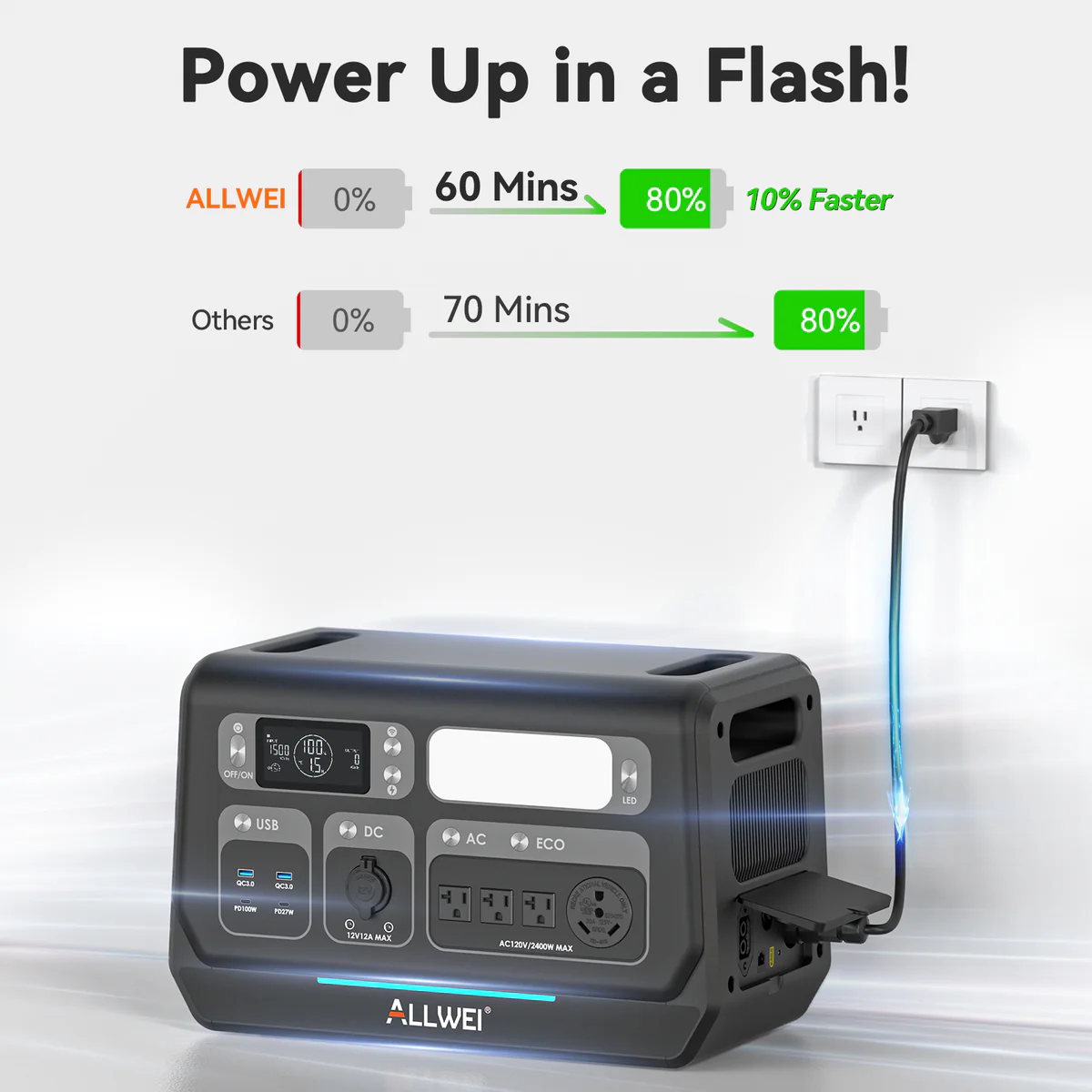
A 2400-watt power station is a significant investment, and proper charging habits can greatly extend its lifespan. To avoid battery degradation, follow these best practices:
- Use the recommended AC input or solar charging options.
- Avoid depleting the battery completely—keeping charge levels between 20% and 80% helps preserve the battery chemistry.
- If using a solar panel, ensure it matches the voltage and solar input requirements of your portable power station.
- Avoid using third-party chargers, as inconsistent power delivery can damage the battery management system.
Storage Tips for Longevity (Temperature, Humidity, etc.)
Proper storage is crucial for maintaining your power station’s performance over time:
- Keep it in a cool, dry place, ideally between inches 50°F and 77°F.
- Avoid exposing it to extreme heat or cold, which can degrade energy storage capacity.
- Store it in a compact, well-ventilated area when not in use.
- If storing for long periods, charge it to at least 50% every few months to prevent battery drain.
Cleaning and Maintenance Routines
Regular maintenance keeps your power station running efficiently:
- Wipe down the polycarbonate and ABS casing with a dry cloth to remove dust and dirt.
- Check AC outlets, USB ports, and single port connections for debris that could cause connectivity issues.
- Ensure all components, including AC output and DC connectors, are free from corrosion.
- If your model has a fan, occasionally check for dust buildup to prevent overheating.
Avoiding Overloads and Battery Damage
Exceeding the max watt rating of your power station can cause damage. To prevent this:
- Check the watt requirements of your household appliances before plugging them in.
- Use energy-efficient essential devices to maximize battery life.
- When using multiple appliances, ensure the total amps drawn does not surpass the station’s limit.
- Never connect high-drain devices like space heaters, which could cause overheating and degrade the battery.
Understanding Battery Cycles and When to Replace
Every battery type has a lifespan measured in complete cycles. A cycle is one full charge and discharge. Most modern portable power stations, like EcoFlow Delta, last between 500 to 2000 cycles before capacity starts diminishing.
Signs that it may be time to replace the battery:
- A noticeable drop in runtime even when fully charged.
- Inability to hold a charge beyond a few hours.
- Overheating during regular use.
Troubleshooting Common Power Station Issues
If your power station is acting up, here are some common issues and fixes:
- Not charging? Check the AC input, DC, or solar input connections.
- Overheating? Ensure proper ventilation and clean any dust from the fan.
- AC inverter failure? Try resetting the system via the app (if available) or checking for firmware updates.
- USB ports not working? Inspect for debris and ensure you’re not overloading a single port.
When to Upgrade: Signs Your Power Station Needs Replacement
Even the best portable power stations wear out over time. Here’s when you might need an upgrade:
- Your station no longer powers essential devices like a fridge, tv, or laptop for a reasonable time.
- You need more portability for RV or camping trips.
- Newer models offer better battery chemistry, faster solar charging, and increased versatility.
- The cost of repairs outweighs the price of a new model.
Conclusion
By following these maintenance and care tips, you can maximize the lifespan of your 2400 watt power station, ensuring reliable backup power for years to come. Regular upkeep, proper usage, and timely upgrades will help you get the most out of your investment while maintaining peace of mind during a power outage.

