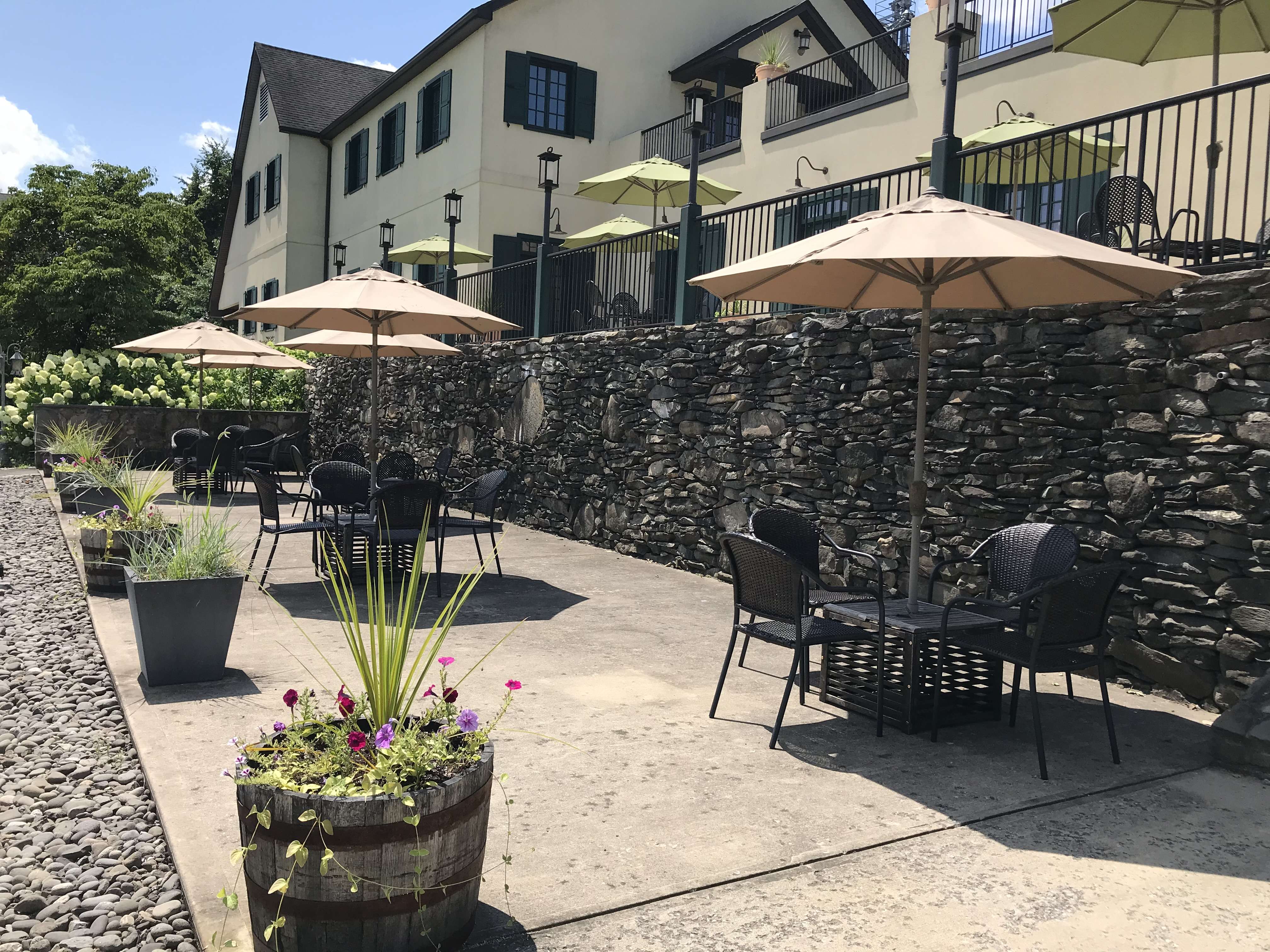

Set in the town of Marlboro in New York’s Hudson Valley, Stoutridge Distillery & Winery represents a distinctive approach to making wine and spirits that is grounded in agriculture, careful design, and a belief that production methods should respect both the raw ingredients and the surrounding environment. The company operates as both a New York State farm winery and a farm distillery, producing wines and craft spirits from fruit and grain sourced largely within the region. Its work reflects a philosophy that values restraint, transparency, and a close relationship to the land.
The story began in 2000 when founders Stephen Osborn and Kim Wagner replanted vineyards on historic agricultural property that had supported grape growing and alcohol production for more than two centuries. Their early focus was not on rapid expansion but on rebuilding the vineyard and designing a production facility that would function in harmony with the hillside terrain. From the beginning, they envisioned a structure that would allow the natural slope of the land to guide the movement of materials through the winemaking process. This idea shaped the construction of a purpose-built facility integrated directly into the landscape, using gravity rather than heavy mechanical handling wherever possible. The winery opened to the public in 2006 with its first commercial vintages produced according to this careful, minimal approach.
The physical layout remains central to how the company operates today. The multi-level structure allows grapes, juice, and wine to move downward through each stage of production without pumping. This gravity-driven process reduces agitation and helps preserve the natural dissolved gases that contribute to aroma and texture. By relying on elevation rather than machinery, the facility supports a quieter and more controlled transformation from fruit to finished wine.
Environmental considerations extend beyond production flow. The site incorporates rooftop solar arrays, passive geothermal temperature regulation, and heat recovery systems connected to distillation equipment. Water conservation measures are also integrated into daily operations. These features are not decorative additions but working systems designed to reduce energy demand and support long-term sustainability. Regional organizations and sustainability directories have cited the property as an example of environmentally focused beverage production, and the business has been recognized through county programs that highlight responsible environmental practices.
All major stages of production take place on site. Fermentation, distillation, aging, and bottling are handled within the same complex, allowing close oversight of every step. This integrated model supports consistency and reflects the company’s desire to maintain control over how its products evolve from raw material to finished bottle.
In winemaking, the emphasis is on methods often described as low intervention or natural in style. Additives are minimized, and the company avoids filtration and fining across its bottlings. The aim is to allow the fruit to express itself without significant alteration. Because the facility relies on gravity rather than pumps, grapes and must are transferred gently, a process that advocates believe helps retain character and aromatic detail. Writers covering Hudson Valley wine have associated the winery with slower, less industrial production methods that emphasize patience and observation rather than manipulation.
The company expanded into spirits in 2017, adding a distillery that carried the same principles into a new category. This move marked a shift from being solely a winery to becoming a combined wine and spirits producer, while still maintaining its emphasis on local sourcing and minimal processing. In 2018, an on-site malt house and kiln were introduced, allowing barley to be malted on-site for whiskey production. This capability strengthened the company’s commitment to a model in which grain is malted, mashed, fermented, distilled, aged, and bottled under one operation.
The distillery produces a wide range of spirits, including American single malt whiskey, rye, bourbon, light whiskey, fruit brandies, grappa, gin, absinthe, liqueurs, and botanical expressions. Some whiskey releases are aged in barrels made from locally sourced oak, contributing to flavor profiles shaped by regional materials. The company has drawn particular attention for its absinthe program, with specialist publications noting its focus on traditional distillation techniques, base spirit preparation, and carefully selected botanicals.
Recognition has followed both its wines and spirits. The company received Best of Class Distilled Specialty Spirit at the American Distilling Institute International Spirits Competition in 2022 for an absinthe expression. It has also earned multiple Double Gold and Gold medals at regional and national competitions and received category honors for a smoked American single malt whiskey at a major international spirits event in 2023. Regional reader and critics awards have acknowledged the business in distillery, winery, and tasting room categories, while the New York Wine and Grape Foundation has included it among highlighted producers in statewide programming and reports. Its environmental efforts have been recognized through designation as an Ulster County Certified Green Business.
Today, the company operates a public tasting room and welcomes visitors for guided tastings and educational experiences that explain both winemaking and distilling methods. Travel and lifestyle publications often present the site as a destination within Hudson Valley tourism, noting its rare combination of winery and distillery functions as well as its environmentally conscious design. Guides have also pointed to its accessibility through regional travel routes and rail corridors, making it part of the broader agricultural and cultural landscape of the valley.
Through its integration of architecture, agriculture, and craft, the company has built an identity that reflects both tradition and thoughtful innovation. Rather than separating wine and spirits into different worlds, it treats them as related expressions of place, shaped by the same fields, climate, and deliberate pace of production.

