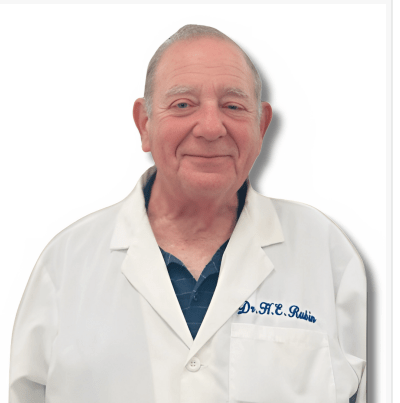

Howard E. Rubin’s career reflects over four decades of dedication to science, public health, environmental safety, and teaching. Born on March 21, 1947, in The Bronx, New York, he moved with his family to rural North Carolina at the age of twelve, a shift that shaped his early experiences and later interest in health and the environment. He earned a Bachelor of Science in Biology from Guilford College in 1969, followed by a Master of Science in Medical Microbiology from Wake Forest University’s School of Medicine in 1971. At the University of Michigan’s School of Public Health, he pursued an intensive academic path and earned three graduate degrees in quick succession: a Master of Public Health in Environmental Health in 1973, a Master of Science in Food Science and Technology in 1975, and a Doctor of Philosophy in Environmental Health Science in 1976. He later continued his training with a National Institutes of Health–funded postdoctoral fellowship at Cornell University, where he studied the biodegradation of man-made chemicals and the environmental fate of pesticides in freshwater systems.
His career began in 1977 when he worked as a consultant for the United States Agency for International Development in Brazil, where he established a graduate program in food science at Universidade Federal Rural do Rio de Janeiro. On returning to the United States, he joined Equitable Environmental Health and completed a study for the National Institute for Occupational Safety and Health that determined safe occupational levels of oxalic acid. In 1978, he became an environmental health scientist at the Mitre Corporation, where he contributed to federal standards on water safety, hospital waste management, asbestos regulations, and toxic exposure limits. From 1979 to 1982, he returned to Cornell University as a postdoctoral fellow, conducting research on pesticides in freshwater systems at trace concentrations. Between 1982 and 1984, he served as a professor at Rutgers University, teaching medical microbiology, microbial ecology, and food microbiology while also supervising doctoral students. At Rutgers, he carried out research on the biodegradation of xenobiotic chemicals in nature and on the survival of Salmonella typhimurium in yogurt, a bacterium recognized as the most prevalent milk-borne pathogen.
In 1985, Rubin joined NUS Corporation as an environmental health scientist, where he managed Environmental Protection Agency site investigations and supervised quality assurance programs. His growing expertise led him to senior positions at the New Jersey Department of Environmental Protection between 1987 and 1991, where he helped draft environmental legislation and developed standards for the reuse of contaminated soil. From 1991 to 1995, he worked as an environmental toxicologist at the New Jersey Department of Health. In this role, he conducted risk assessments for hazardous waste sites, evaluated the health effects of environmental contaminants, and presented findings to the public. His work included a public health advisory on Curcio Scrap Metal that was presented to the United States Congress.
Alongside his government service, Rubin built a distinguished teaching career across several decades. From 1995 to 2016, he taught at Barry University, covering subjects such as biology, environmental science, human biology, and nutrition. From 1995 to 2021, he was part of the faculty at Nova Southeastern University, where he taught courses in biology, microbiology, environmental science, environmental health, public health, and anatomy and physiology. Between 1995 and 2005, he was also on the faculty of Valencia Community College, teaching biology, microbiology, anatomy and physiology, environmental science, and human biology. At Valencia, he also led a seminar series titled Success Strategies for College Students. From 1997 to 2022, he taught environmental science and biology at Excelsior College, and from 2008 to 2019, he served as faculty at Walden University, where he taught graduate-level courses in public health and served as a doctoral advisor. He also taught at the University of Phoenix from 1998 to 2021, leading courses in biology, environmental science, data-based decision making, statistics, and anatomy and physiology. Since 2008, he has been a professor at Miami Dade College, teaching biology, microbiology, environmental science, and nutrition, and since 2013, he has taught medical microbiology at Keiser University. He is also an experienced online course developer with certifications in course design and expertise in multiple learning management systems, including Blackboard, Blackboard Ultra, Canvas, and Outlook.
Rubin’s contributions also extend to writing and research. He has authored numerous peer-reviewed papers in journals such as Environmental Science and Technology, Applied and Environmental Microbiology, and the Journal of Dairy Science, covering microbial ecology, toxicology, and food safety. His scientific articles include research on the growth of phenol-mineralizing microorganisms in freshwater, the effects of nutrients on phenol and p-nitrophenol mineralization, and inhibitory factors of yogurt against Salmonella. He has written for general audiences as well, including a 2021 article on algal blooms for Palms West Monthly. In addition to research articles, he has prepared numerous reports for government agencies, including health consultations and risk assessments for hazardous waste sites. Notable examples include a health consultation for Metaltec Aerosystems in Sussex County, a health assessment for U.S. Radium contamination in Essex County, and a public health advisory for Curcio Scrap Metal in Bergen County.
As an author, he has published several books that reflect both his professional expertise and his personal experiences. These include Adjunct Teaching Online and On Campus: How to Make Up to 6 Figures and More as an Adjunct Professor, Is Your Home Harming You? How to Identify and Prevent Health Issues in Your Home, How a Nobody Became a Somebody, and The Successful Student: A Comprehensive Guide to Academic Excellence. His books span practical guidance on teaching, health in the home environment, personal development, and student success.
Rubin has also presented at numerous conferences and public events, including meetings of the American Society for Microbiology, university seminars, and public forums. His topics have ranged from microbiology and toxicology to environmental health, water quality, stress, weight loss, and strategies for student achievement. Between 2012 and 2015, he extended his outreach to a broader audience as a cruise enrichment speaker for Royal Caribbean and Celebrity Cruise Lines, delivering lectures on health, wellness, and environmental awareness.
Throughout his career, Rubin has been recognized with multiple honors. He was elected three times to Who’s Who Among America’s Teachers, received the Who’s Who in America Lifetime Achievement Award in 2018, and was awarded a faculty fellowship at Rutgers University. He is a member of the Society of Sigma Xi, an honorary research society, and holds credentials as a Certified Seminar Leader with the American Seminar Leaders Association. He also achieved recognition as a Competent Toastmaster with Toastmasters International and was honored as an outstanding professor at several universities where he taught.
Howard E. Rubin’s life and work demonstrate a rare blend of scientific expertise, public service, and a passion for teaching. From his early research on microbial ecology to his efforts shaping environmental legislation and his decades of guiding students in classrooms and online, his career reflects a deep commitment to improving both human health and environmental safety. His professional legacy continues to influence students, scientists, policymakers, and the wider public, ensuring that his contributions to environmental policy and higher education will endure for years to come.

